7th Heaven Shop

7th Heaven Shop
Share a contribution Buying this Lucky 7 charm s

All About 7th Haven

Just like SMS to wish, After doing various test on experimental basis we have devised a method, like finding success through wishes and prayers. Its like wishing ponds or make a wish kind of thing, no you don’t need to through coin or penny just joining freely in our site would do. You can join in to wish your success and for success of your nation. more the nos of browser by signing up in www.7thhaven.in and more the observer in weekly wisdom we think more the success they would be able to achieve for their nation for any and many nation. Grater the nos of wishers grater the success, progress and prosperity for them and for their nation. So join in if you lover your success and your nation , . ITS ,SPIRITUALITY REDEFINED(Made Easy) This is royal knowledge, the royal secret, supremely holy, directly experience, righteous, easy to practice and imperishable.I cannot teach anybody anything. I can only make them think.–  Acknowledgement I Express My Heartfelt gratitude to all the support system I received form many commercial, technical, net server, software companies and also to those who have untouchables involvement and for their encouragement and guidance in all respects for the preparation of this website www.7thhaven.in inI am also indebted to all for providing me with all the necessary assistance necessary for the conduction of this site. Fr Samrat FOR THE BEST AND SAFE EXPERIENCE OF JOURNEY OF LIFE OBSERVE WEEKLY WISDOM Birthdays are not gauged by time and the years you spend on earth. But by your thoughts and actions which determine the real worth Society and the human being are not two different entities; when there is order in the human being, there will be order extermally. Because there is disorder in all of us, there is disorder outwardly. -J.Krishnamurti.BELIEVE IN FACTS AND YOURSELF MORE THAN THE STARS . INTELLEGENT OBSERVATION ALWAYS PAYS. IF YOU HAVE ANY IDEAS ON THE FOLLOWING THEME AND ANY VISION OF THOUGHT ON ANY CURRENT EVENT THEN WRITE TO US(within 7777 words) ALSO CHECK IN LIVE AND CHECK OUT THE ABSOLUTE MAGIC OF 7,9,10 IN ALL SPORTS ARENA Suitable articles will be published & rewarded-Most of us can read the writing on the wall.We just assume it's addressed to someone else-----Every moment is full of possibilities. It only requires your keen appreciation and best use of it to prove them to the world.The King may make a nobleman, but he cannot make a gentleman.Make yourself an honest man and then you may be sure there is one rascal less in the world.Even The actions of men are like index of a book; they point out what is most remarkable in them. if a very wicked person worships God to the exclusion of any body else, he should be regarded as righteous, for he has rightly resolved- Bhagavad Gita- When men are pure, laws are useless; when men are corrupt laws are broken-An original writer is not one who imitates nobody, but one whom nobody can imitate.What we lern with pleasure we never forget- My way of joking is telling the truth; that is the funniest joke in the world The first great gift we can bestow on others is a good example

Monday, April 24, 2023

The Soul's Calling: Answering the Signal to Go Inside

 The Age-Achievement Relationship: Debunking the Myth


It is a common notion that success is directly proportional to age, that one can only achieve greatness after decades of experience and hard work. However, history has shown us time and again that there is no such relationship between age and achievement. Success can crown someone at any age, from the young to the old, as talent and hard work know no age limit.

 Examples of successful individuals who achieved greatness at a young age abound. For instance, William Pitt became the Prime Minister of England when he was only 24 years old. Additionally, Goethe started writing when he was just 10 years old. His masterpiece, Faust, only saw the light of day when he was 80 years old. These examples demonstrate that age is not a barrier to success, as talent and hard work can lead to success at any age.

 Similarly, there are many individuals who achieved greatness in their middle age. For instance, Gladstone became the Prime Minister of England when he was 83 years old. Leonardo da Vinci painted his famous Last Supper when he was 77 years old. These examples demonstrate that age does not dictate one's ability to succeed in life.


Old age is not a barrier to success either. For instance, Coleridge wrote his famous poem, The Rime of the Ancient Mariner when he was 20 years old, while Kelvine made his first attempt at scientific research when he was 18 years old. However, he was 83 years old when he brought out an improved version of the navigator compass. These examples demonstrate that age is not a barrier to success, as long as one has the passion and dedication to achieve their goals.


Health and disabilities also do not determine success. For example, Milton was blind, and Beethoven was deaf, yet they both achieved greatness in their respective fields. Byron was also deaf, and Demosthenes stammered, yet they both were successful in their lives. These examples show that success is not determined by physical health or disabilities, but rather by one's ability to persevere and overcome obstacles.


In conclusion, the relationship between age and achievement is a myth. Success can be achieved at any age, from the young to the old. Talent, hard work, dedication, and perseverance are the keys to achieving success, regardless of age or physical health. History has shown us that age is not a barrier to success, and individuals with disabilities can still achieve greatness. The most important factor is one's determination and dedication to succeed.

 The Soul's Calling: Answering the Signal to Go Inside

 
At some point in our lives, a signal presents itself, calling us to go inside and explore the depths of our being. However, for many of us, this message goes unnoticed, hidden beneath the layers of our ego. It may take dissatisfaction or multiple wake-up calls for us to finally recognize and respond to this calling. Even those with progressive upbringings need to break free from conditioning and breathe in the freer air.


Ignoring the soul's calling is spiritual suicide, as the solution to our existential questions cannot be found on the surface. The first step towards answering this calling is to reverse the orientation of our consciousness, which requires Herculean effort and complete surrender at the end of our tapasya. We must remain vigilant and repeatedly realign ourselves to go deeper within.


Although it may be tempting to retreat into seclusion, Integral Yoga teaches us that the best way to transform ourselves is through the thick of life itself. We are constantly tested and must embrace our station in everyday life, stepping back continuously to retrieve our source. It is essential to maintain poise and protect our inner connection, eventually identifying with the Truth that sits inside. This process solidifies our awareness and transmutes it into consciousness, leading to profound inner change.


True Consciousness is always aligned with Force, Shakti, and is not merely a witness but an agent of change. The identity of consciousness with the soul shows us the way to inner mastery, enabling the conversion of our nature. The whole nature goes through a profound change, leading to a dynamic shift in our existence.


In our passage through lifetimes, the soul's calling will eventually come. If it arrives in this life, we must embrace it and hold it close to our heart, shifting everything inside and transforming our modality of existence. Surrendering to the calling leads to the discovery of our true purpose and the fulfillment of our soul's journey.


IF HE EXIST

 I drive joy there was a doctor in Benaras who spent 7 minutes in the morning and evening for mediation on God. Knowing this, his colleagues and friends laughed at him. One day they argued that he was wasting 7 precious minutes on something, which he had been misled into believing. The doctor replied, “Well, if God does not exist, I agree that I am wasting 7 minutes a day. But, if He exists? I am afraid you are wasting your entire lifetime. I prefer to waste 7 minutes rather than a lifetime. Why should you grudge me the 7minutes joy that I derive 4m.-


ILLUSTRATED REVIEW :7th heaven moment of the week in ipl csk won by 7 wk ipl gt won by7 Rcb won by 7

Monday, April 17, 2023

The Three Phases of Advaita Vedanta: Sravana, Manana, and Nididhyasana

The Three Phases of Advaita Vedanta: Sravana, Manana, and Nididhyasana


Advaita Vedanta is one of the six schools of Indian philosophy and is based on the Upanishads, the Bhagavad Gita, and the Brahma Sutras. According to Advaita Vedanta, there is only one reality, Brahman, and the individual self, or Atman, is identical to Brahman. To attain this realization, one must follow the three phases of Sravana, Manana, and Nididhyasana.


Sravana refers to the first phase of listening to the sacred texts. The Mahavakyas or the great sayings, such as "Tat Tvam Asi" or "Aham Brahmasmi," are considered the direct instrument of release. The second phase, Manana, involves reflecting on the teachings and understanding them intellectually.


The third and final phase, Nididhyasana, involves continued meditation on the teachings until one attains direct experience or intuition of the self. The Bhamati school of Advaita Vedanta holds that Nididhyasana is the means to remove Avidya or ignorance, while the Vivarana school believes that Mahavakya is the direct means.


Vachaspati, the author of the Bhamati, asserts that verbal testimony can only provide mediate knowledge, which can be transmuted into immediate intuition only by deep meditation. However, Surevara, in his Nashkarya Siddhi, disagrees with this view and asserts that the immediacy or mediacy of knowledge depends on the object of knowledge. If the content of Sravana is the self, which is most immediate, immediate experience can arise from listening to the Mahavakya.


The reason why we do not have this experience at once, even though listening to the sacred text, is because of the obstacles in the way. These may be in the form of wrong knowledge or lack of faith in the teachings of the Upanishads. When these obstacles are removed, Sravana of the Mahavakya will lead to immediate self-experience.


The example of the ten travelers crossing the river is relevant here. When they reach the other side, they count themselves and find to their dismay that they are only nine. The tenth traveler points out that he himself is the tenth person, and they are happy again. Similarly, wrong knowledge or lack of faith can be removed by hearing the teachings of the Upanishads and belief in them, which leads to the realization of the self.


Shuddh-Advaita: Vallabhacharya's Doctrine of Divine Grace


Vallabhacharya, a prominent Hindu philosopher, developed the Shuddh-Advaita or Pure NonDualism, which posits the path of Pushti-marga or Divine Grace. According to this philosophy, Brahmn is personal in nature, perfect, and the best of Beings. Vallabhacharya saw Brahmn as assuming the form of the world itself, possessing almost all the qualities of Para-Brahmn. The external world is real because it is the material form of Brahmn, emanating from the Self itself for the sake of divine lila or sport.


Vallabhacharya interprets the Upanishadic Self from a different standpoint than Shankara's Advaita. He bases his concept of Shuddh-Advaita on the notion of a personal God in the Brihadaryank Upanishad, where Brahmn desired to be many, and the Self manifested itself as a multitude of souls. For Vallabhacharya, Maya is the instrument by which Brahmn reveals the world from itself, and not the illusion which Shankara defined it as. His doctrine of Pushti-marga echoes the theistic strain found in the Mundaka Upanishad - that the knowledge of the Self is possible only through Divine Grace.


Vallabhacharya roots the immanence and transcendence of Brahmn in the figure of Krishn and develops his concept of Bhakti accordingly, giving it the character of a rasa or sentiment of love. God has assumed human form for the lila, to bestow His grace on the devotees. Liberation is to be sought in the interplay of emotions between the devotee and Krishn, in all the hues and colours of the Nav-Rasa or nine primary emotions. The Mukhar-Vinda Bhakti is the highest form of devotion, which is meditating on the physical form of Krishn, as the gopis of Vrindavan are alluded to have practiced unconsciously, in the Bhagavat Purana.


Vallabhacharya further postulates that this liberation is to be had in the figure of Krishn as Shrinathji, the boy Krishn lifting Mount Govardhan with his little finger. The tradition has it that Vallabha had the inner darshan of Krishn in the form of Shrinathji and was given the BrahmaSambhandha mantra, followed to this day for initiation into the Pushti-marga.


In the Vallabha tradition, complete surrender to Krishn seeking his grace lies at the heart of Shuddh-Advaita. The consecration of the self to Krishn, according to Vallabhacharya, awakens the soul to its real nature as part of God's consciousness. While the tradition lays down regular seva or divine service to God as part of the process, surrender to Krishn seeking his grace is the key to realizing that the manifest world is only a lila of Brahmn.


IF HE EXIST

 I drive joy there was a doctor in Benaras who spent 7 minutes in the morning and evening for mediation on God. Knowing this, his colleagues and friends laughed at him. One day they argued that he was wasting 7 precious minutes on something, which he had been misled into believing. The doctor replied, “Well, if God does not exist, I agree that I am wasting 7 minutes a day. But, if He exists? I am afraid you are wasting your entire lifetime. I prefer to waste 7 minutes rather than a lifetime. Why should you grudge me the 7minutes joy that I derive 4m.-


ILLUSTRATED REVIEW :7th heaven moment of the week in epl son 7 scored a goal ipl gt made 177/7 RRwon scoring 179/7


Monday, April 10, 2023

The Relationship Between Science and Religion: Exploring the Case of India

 The Relationship Between Science and Religion: Exploring the Case of India

 Introduction:


The relationship between science and religion has been a topic of debate for centuries. While some argue that scientific progress leads to the decline of religious influence, others believe that science and religion can coexist. This essay explores this relationship with a focus on India, which experienced a religious renaissance in the latter part of the 19th century, spurring interesting developments in the interaction between science and religion.

 The Absence of Inevitable Causal Relationship:

It is essential to note that there is no inevitable causal relationship between the advancement of science and the decline of religious influence. If there were such a relationship, the decline of religious influence in Europe, where science has advanced significantly, should have happened all over the world, but this has not been the case. Therefore, it is crucial to examine the case of India, where science and religion have had an interesting relationship.


India's Religious Renaissance:


In the latter part of the 19th century, India experienced a religious renaissance, spurred by the life and experiences of Sri Ramakrishna. Sri Ramakrishna's life proved that essential religion, which concerns the eternal truth of God and his relation to man, and man's possibility of seeing God and becoming enlightened, is always the eternal religion in its power and promise. No progress of science can have any negative influence on the fact of God because when God is seen, science can only become chastened by it.


Different Religions and the Universal Truth:

Sri Ramakrishna proved that what he experienced is true for all religions. Different religions may or may not acknowledge this fact, but when God is seen in the world by anyone belonging to any religion, all religions, irrespective of their differences, are strengthened in this fact. Therefore, it is crucial to recognize the universal truth in religion that transcends individual dogmas and beliefs.


Religion's Weaknesses:

However, when religion focuses on dogmas that are not necessarily spiritual, it weakens itself and loses its authority. In these days of vigorous free thinking, any religion that is not concerned with the broad facts of God, but instead, is preoccupied with dogmas that are not necessary, weakens itself further.


Conclusion:

In conclusion, the relationship between science and religion is complex and cannot be reduced to a simple causal relationship. Sri Ramakrishna's life and experiences showed that essential religion transcends individual dogmas and beliefs and is a universal truth that strengthens all religions. However, any religion that is preoccupied with dogmas that are not spiritual weakens itself and loses its authority. It is essential to recognize the universal truth in religion and to focus on the broad facts of God rather than individual dogmas.

 Jalatarpanam: The Significance of Water in Various Traditions and Cultures


Water holds a special place in various traditions and cultures around the world. In Hinduism, Jalatarpanam is a unique ritual that involves standing in waist-deep water while facing the sun, filling the hands with water and allowing it to fall back. The Ganga river is revered as a Mother Goddess, where devotees immerse themselves as well as carry its water home. Water is not just a source of survival in Indic tradition but also a medium of psycho-spiritual cleansing.


Buddhist master Atisha noticed the purity of springs in Tibet and proposed water alone to be used as an offering. Bhutanese Yonchap made the daily offering of seven bowls of water a common practice, symbolizing mental purification from afflictions, resulting in clarity and calmness.


Water in Mithraism is revered as a living element that nourishes everything and is guarded by Goddess Anahita, Ava, associated with fertility, healing, and wisdom. Prophet Zoroaster considered offering water to be the most meritorious of actions, and Zoroastrians are sometimes called ‘water-worshippers.' Water is also a purificatory ritual in many cultures, such as Islamic wudhu and the washing of the deceased. Baptism symbolizes the death of the old self and the resurrection into a new life in Christ.


In Taoism, water is referred to as the watercourse way, and its pliability and ‘allowingness’ suggest humility, a sign of true intelligence and wisdom. Lao Tzu writes, "Water is the softest and most yielding substance. Yet nothing is better than water for overcoming the hard and rigid, because nothing can compete with it."


Water is also associated with health in the Rig Ved, which hails water as the reservoir of all curative medicines. Water is one of the five mahabhutas, great elements, and its association with health is due to its function as a healing and regenerating agent. It moistens tissues in the eyes, nose, and throat, carries nutrients and oxygen to the cells, and balances body temperature.


Water is a metaphor for resilience and freedom, as its unimpeded flow, even when facing obstacles, is adopted as a principle in martial arts, Qigong, and Tai Chi. Water is also capable of wielding great power, despite its seeming fluidity and weakness. Water metaphors are abundant in our language, with flow being the key to its use, and its stagnation likened to staleness or rigidity.


In psycho-mythological literature, water is regarded as the symbol of the unconscious and is connected to the moon. It is often depicted as an inverted triangle. Water in the Chinese tradition is yin, feminine, and its flow is downward, with energy of stillness and conserving.


Water is nurturing, gentle, and accommodating, and ancient sages advised virtuous people in leading positions to adopt these qualities. Water's evocations are felt in the fresh smell after rain, the tranquillity of the murmuring river, and in the playfulness of children jumping into puddles or splashing water. As Gene Kelly showed in the film ‘Singin’ in the Rain,’ water can also bring out the joy in adults.

  IF HE EXIST

 I drive joy there was a doctor in Benaras who spent 7 minutes in the morning and evening for mediation on God. Knowing this, his colleagues and friends laughed at him. One day they argued that he was wasting 7 precious minutes on something, which he had been misled into believing. The doctor replied, “Well, if God does not exist, I agree that I am wasting 7 minutes a day. But, if He exists? I am afraid you are wasting your entire lifetime. I prefer to waste 7 minutes rather than a lifetime. Why should you grudge me the 7minutes joy that I derive 4m.-


ILLUSTRATED REVIEW :7th heaven moment of the week in ipl csk won by 7 in, kkr won scoring 207/7 epl son no 7 scored a goal

Monday, April 3, 2023

The True Path to Spiritual Enlightenment

 The True Path to Spiritual Enlightenment


The journey towards spiritual enlightenment is not a simple one. It requires continuous effort and dedication, rather than occasional japa or meditation practices followed by a life filled with material pursuits. True spirituality arises when every thought, action, and circumstance in one's life is imbued with spiritual essence. It must be a part of one's being, rather than just a set of practices. To achieve this, it is necessary to work with one's hands, talk to people about work and business with one's mouth, but always keep the mind fixed on God. Only through living in God can one truly find purpose and fulfilment in life.


To reach this state of enlightenment, one must possess humility, selflessness, and non-attachment. Understanding that God is the only reality and truth is crucial to maintaining this state. While it is difficult, it can be achieved through repeated practice. Sri Ramakrishna used the example of a village woman who was able to perform multiple tasks simultaneously while keeping her mind focused on her work as an illustration of this practice. She could cook rice, settle accounts, and breastfeed her baby all at the same time, while keeping her attention on the task at hand.


In conclusion, the path to spiritual enlightenment requires continuous effort and dedication, rather than just occasional spiritual practices. It is necessary to imbue every aspect of one's life with spirituality, and to keep one's mind fixed on God. This can only be achieved through humility, selflessness, non-attachment, and repeated practice.


True Happiness Lies Within The Illusion of Seeking Outside Oneself


The pursuit of happiness outside of oneself is akin to trying to capture a cloud with a lasso - an impossible feat. True happiness is not a material possession, but a state of mind that must be experienced and lived. Seeking happiness through worldly power or wealth is futile, as it can never be fully attained. The restlessness that comes from an outward focus of awareness only ensures that happiness remains elusive.

 Genuine happiness can only be found within oneself, and those who seek it elsewhere are like those chasing rainbows among the clouds. One must analyze sense-pleasures and recognize that they are a form of bondage, rather than freedom. The way to true happiness is through self-control, not further indulgence.

 Depending solely on external circumstances for nourishment gradually depletes one's reserves of energy. Material riches without inner peace are like dying of thirst while bathing in a lake. It is spiritual poverty, not material lack, that lies at the root of human suffering.

 It is essential to differentiate between one's needs and wants, and to minister only to the former. Pursuing limitless wants and false happiness outside oneself will only lead to less happiness in the long run. Do not be a slave to possessions, and even your needs should be boiled down to their essence.


True happiness can be achieved through self-control, plain living and high thinking, and spending less money. It is important to earn more so that one can be of service to others. The drama of life is an illusion, and the wise recognize this, seeking eternal happiness within themselves.


IF HE EXIST

 I drive joy there was a doctor in Benaras who spent 7 minutes in the morning and evening for mediation on God. Knowing this, his colleagues and friends laughed at him. One day they argued that he was wasting 7 precious minutes on something, which he had been misled into believing. The doctor replied, “Well, if God does not exist, I agree that I am wasting 7 minutes a day. But, if He exists? I am afraid you are wasting your entire lifetime. I prefer to waste 7 minutes rather than a lifetime. Why should you grudge me the 7minutes joy that I derive 4m.-


ILLUSTRATED REVIEW :7th heaven moment of the week in ipl pbk won by 7 

Monday, March 27, 2023

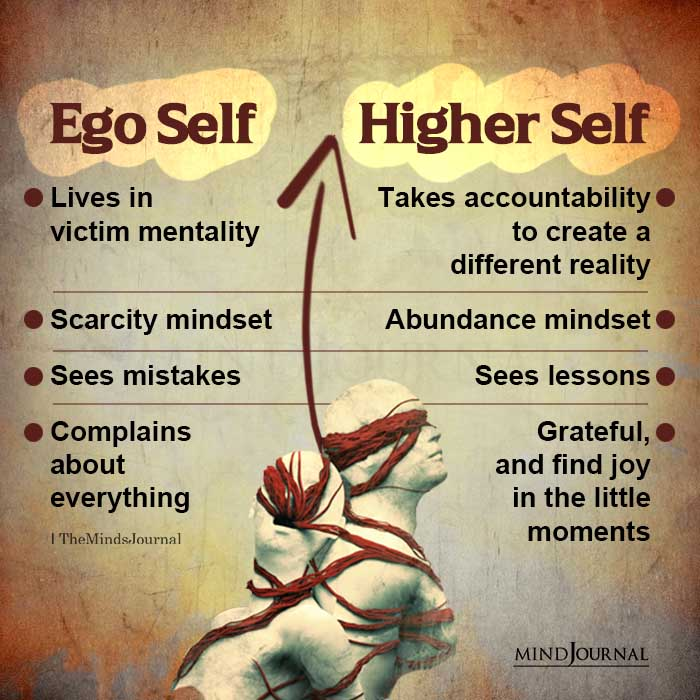
The Two Selves Within Us: Ego Self and Self Supreme

 The Nature of the Self and the Ultimate Knower


According to Patanjali, the mind is not the self; rather, the self is the observer and the mind is observed. However, some philosophers question whether the ego-self, which is often used to refer to the observer, is a permanent and unchanging principle. They argue that the ego-self may fluctuate, and there may be a continual flow of ego-selves without the need for a permanent self that abides through all experiences. Even William James did not believe in the idea of a permanent, abiding self.


A Buddhist teacher named Macarena, who lived in the third century AD, also rejected the idea of a permanent self. He believed that the physical system is a continuous stream of physical and psychological elements without any integrating principle or permanent abiding self that integrates them into a coherent whole. Even today, some modern philosophers and psychologists do not acknowledge the existence of any self at all, and those who do acknowledge the existence of an ego-self do not necessarily view it as something permanent or abiding.


Philosophers such as Professor Stout, the founder of essential points of knowledge, and Russell also do not acknowledge any permanent self because it is not observable. Instead, we only observe fluctuating egos that engage in activities such as eating, feeling, thinking, knowing, and seeing. The Upanishads, which were written centuries ago, provide an answer to this question by suggesting that the ultimate knower or seer is behind all the fluctuating sensory objects. This ultimate knower cannot be objectified because it is the ultimate seer, and there is nothing beyond it.


 The concept of a permanent, abiding self has been questioned by philosophers throughout history. While some argue for the existence of an ego-self, others reject the notion of any self at all. The Upanishads provide an answer by pointing to the ultimate knower, which cannot be objectified and is the ultimate seer behind all sensory objects. This suggests that the self is not a static entity but rather a continuous stream of experiences, and the ultimate knower is the unchanging principle that integrates them into a coherent whole.


The Two Selves Within Us: Ego Self and Self Supreme


Within each one of us, there exists a duality of selves. One is the lower self, commonly known as the ego self, which is driven by passion, pride, lust, hatred, and greed. This self is selfish and miserly, and we often identify ourselves with it, even though it is just a tiny speck in the grand scheme of things. It sits on the threshold of our consciousness and can easily lead us astray.


However, there is a larger and nobler self, the Self Supreme, which we are often unaware of. When we identify ourselves with this supreme self, the divine power and potential hidden within us will unfold, leading to wonderful things happening in our daily life.


To reach this supreme self, we must annihilate our ego, trample our sense of self, and become nothing, not even zero. Once we have achieved this, we will acknowledge the presence of the divine in everything around us.


The journey to reach this state is long, but time is short, so we must start now. We are like seeds with infinite possibilities, but we must give up our "seedhood" to grow anew.


Yogi Mahadev had a unique way of teaching this lesson. He asked a young man who wanted to be his disciple to jump from the peak of a mountain, saying that unless and until he dies, he cannot be reborn. To understand this, the young man had to go to a farmer, who explained that unless seeds are buried completely, they cannot yield a new crop. Similarly, unless we lose ourselves completely, we cannot grow anew.


IF HE EXIST

 I drive joy there was a doctor in Benaras who spent 7 minutes in the morning and evening for mediation on God. Knowing this, his colleagues and friends laughed at him. One day they argued that he was wasting 7 precious minutes on something, which he had been misled into believing. The doctor replied, “Well, if God does not exist, I agree that I am wasting 7 minutes a day. But, if He exists? I am afraid you are wasting your entire lifetime. I prefer to waste 7 minutes rather than a lifetime. Why should you grudge me the 7minutes joy that I derive 4m.-


ILLUSTRATED REVIEW :7th heaven moment in wpl captain 7 mi won first edition of wpl , by 7 wk

Sunday, March 19, 2023

The Yoga Mysticism: Achieving the Divine Presence Within

  The Yoga Mysticism: Achieving the Divine Presence Within


Yoga mysticism is a powerful tool that can help individuals actualize and enjoy the sovereign divine presence within themselves. The goal of yoga is to achieve union with the divine, which gives individuals a sense of continuity and a feeling of being one with all things. The presence is sometimes referred to in Atmic terms, such as "I am the self in the heart of all living beings," or in theistic language, such as "The Lord resides in the region of the heart of all living beings."

 The measure of all perfection that man is capable of achieving is the attainment of the savatmbhava, the continuity of being in the all and the all in him. This state of being is the ultimate goal of yoga, and there is nothing more to seek after. Swami Vivekananda believed that integration with the Divine is possible through work, worship, or psychic control of philosophy, or a combination of these.

 The practice of yoga enables individuals to connect with the divine presence within themselves. It is through this connection that one is able to experience a deep sense of peace and tranquility. This is achieved through the physical practice of yoga postures, breathing exercises, and meditation, which help individuals to focus their minds and connect with the divine.

 The divine presence within us is always present, but it is often obscured by our thoughts, emotions, and daily distractions. Through the practice of yoga, individuals can learn to quiet their minds, release their emotions, and let go of the distractions that keep them from experiencing the divine presence within.

 
The path to achieving the divine presence within oneself is not easy, but it is worth the effort. It requires discipline, dedication, and a willingness to let go of attachments and desires. The journey is not one that can be completed overnight, but rather it is a lifelong process of self-discovery and spiritual growth.

 In conclusion, yoga mysticism is a powerful tool that can help individuals achieve the ultimate goal of yoga, which is to connect with the divine presence within themselves. Through the practice of yoga, individuals can learn to quiet their minds, release their emotions, and let go of the distractions that keep them from experiencing the divine. While the path to achieving this state of being is not easy, it is worth the effort, as it provides individuals with a deep sense of peace, tranquility, and spiritual fulfillment.


Happiness is Within: Finding Bliss Through Self-Control and Inner Peace


Many people believe that happiness can be found outside themselves, in material possessions or worldly pleasures. However, true happiness is not a thing that can be obtained through external means; it is a state of mind that must be lived. Seeking happiness outside oneself is like trying to lasso a cloud - it is a futile endeavor that will only lead to disappointment and restlessness.

 The pursuit of sense-pleasures may bring temporary enjoyment, but closer examination reveals that it actually leads to soul-bondage rather than freedom. The way to true happiness is through self-control and the cultivation of habits of plain living and high thinking. Possession of material riches without inner peace is like dying of thirst while bathing in a lake; it is spiritual poverty that lies at the core of human suffering.

 It is important to differentiate between needs and wants, and to minister only to one's needs in order to find lasting happiness. Pursuing limitless wants and false happiness through external conditions will only lead to a depletion of energy and an elusive sense of restlessness. Instead, we should focus on boiling down even our needs and spend our time in search of inner peace and lasting happiness.


Enthrone your fickle consciousness on the changelessness and calmness within you, which is the throne of God. Lift the veil of illusive change and be established in your immortal nature. The unchangeable, immortal soul is hidden behind the screen of consciousness, and true happiness can be secured through the exercise of self-control and the cultivation of habits of plain living and high thinking.


Ultimately, the drama of life is merely an illusion, and those who mistake it for reality suffer the punishment of spiritual blindness. The wise, however, recognize the drama for what it is and seek eternal happiness within themselves. By doing so, they are able to manifest bliss in their lives, day and night, and become a means of helping others to help themselves. True happiness is not a destination to be sought after, but a state of mind that must be lived, found within the self through inner peace and self-control.


 IF HE EXIST

 I drive joy there was a doctor in Benaras who spent 7 minutes in the morning and evening for mediation on God. Knowing this, his colleagues and friends laughed at him. One day they argued that he was wasting 7 precious minutes on something, which he had been misled into believing. The doctor replied, “Well, if God does not exist, I agree that I am wasting 7 minutes a day. But, if He exists? I am afraid you are wasting your entire lifetime. I prefer to waste 7 minutes rather than a lifetime. Why should you grudge me the 7minutes joy that I derive 4m.-


ILLUSTRATED REVIEW :7th heaven moment in epl saka no 7 scored a goal

Monday, March 13, 2023

"Transforming Self-Image for Success: Overcoming Negative Attitudes and Building Confidence"

 "Transforming Self-Image for Success: Overcoming Negative Attitudes and Building Confidence"


Many students struggle with a false self-image, believing they are not intelligent or capable of studying well. These beliefs are often rooted in negative experiences and feedback from others. However, it is possible to help students transform their self-image and build self-confidence.


The key is to challenge their false beliefs with new evidence and experiences. Start by guiding them through simple problems and celebrating their successes, no matter how small. Gradually increase the difficulty of the tasks, and continue to offer words of encouragement and support.


Through repeated success, the negative attitudes and feelings of defeat that once held them back will slowly be erased. Their self-image will be transformed, and they will regain the self-confidence needed to achieve their goals.


It is important to approach this process with patience, love, and respect for the student's sense of self. With the right guidance and support, it is certainly possible to change a false self-image and help students reach their full potential.


  Happiness Beyond the Illusion of the Ego


Why do we continually seek happiness in a world of finite possessions and identities? How does the ego become attached to that which is merely an illusion, binding us to a cycle of suffering? In the Vishnu Purana, part seven, chapter six, it is explained that "the intellect takes what is not the Atman to be the Atman. Therefore, the mind takes what is not one’s own to be ‘mine’." Our false identifications with the body and mind create ignorance that the ego fiercely defends at all costs.


But how can we free ourselves from this cycle of suffering? Verse 2 of the Kena Upanishad offers a powerful tool for meditation: "That which is the hearing behind hearing, the thinking behind thinking… Having abandoned the ego and rising above all senses, the wise become immortal." This verse asks us to maintain a distance from our perceptions and to inquire into the entity behind our thoughts and experiences. Through this inquiry, we may discover a Subtle Consciousness that underlies all our knowledge, revealing our eternal nature. By stepping behind our thoughts and sense perceptions, we can come to understand the Self and directly experience it as Brahmn, the unifying force that links all existence.


Verse 5 of the Kena Upanishad connects Brahmn to our minds: "Which one cannot grasp with one’s mind, but by which the mind itself is grasped, know That alone as Brahmn…” Our minds may try to reach Brahmn, but it is Brahmn that ultimately reflects in the mind, revealing itself as the only knower. To awaken to this truth, we must first recognize the subtlety of our true nature and embrace the thought "I am Brahmn." As we anchor ourselves in this realization, the Self becomes more evident at all times.


To practice these verses, we may use our memories as a starting point. When our associative thinking pulls us back to a memory, we can step back and inquire into the entity that remembers and the presence that was there in that memory. Through this inquiry, we may come to recognize that the Atman was always present as the Only Presence at that time and remains the same presence now in this moment. From the viewpoint of Supreme Reality, nothing has changed, only our fleeting ego with its likes and dislikes.


In truth, our True Self is the Only Constant that remains the same at all times. By recognizing this, we can discover the Eternal Absolute and realize that whatever takes place within the mind is only the rise and fall of ego-awareness, which pertains to an illusive and limited 'I'. Through our inquiry, we may come to recognize that any thought we come to know is only there because Consciousness within the Atman makes it known to us. By embracing this realization, we can transcend the illusion of the ego and discover lasting happiness in the unchanging truth of our eternal nature

  IF HE EXIST

 I drive joy there was a doctor in Benaras who spent 7 minutes in the morning and evening for mediation on God. Knowing this, his colleagues and friends laughed at him. One day they argued that he was wasting 7 precious minutes on something, which he had been misled into believing. The doctor replied, “Well, if God does not exist, I agree that I am wasting 7 minutes a day. But, if He exists? I am afraid you are wasting your entire lifetime. I prefer to waste 7 minutes rather than a lifetime. Why should you grudge me the 7minutes joy that I derive 4m.-


ILLUSTRATED REVIEW :7th heaven moment in Everton no 7 scored a goal in test ind vs aus no 77 scored a century

“If you want peace in your own house, don’t go banging on Your Neighbour’s door.”

  “If you want peace in your own house, don’t go banging on Your Neighbour’s door.” On the surface this is very simple to understand. Howe...

Advertise with with us make a profit

Advertise with with us make a profit
ITS FREE TILL YOU MAKE PROFIT

Contact Form

Name

Email *

Message *

Disclimer

Disclimer
Terms and Conditioin