7th Heaven Shop

7th Heaven Shop
Share a contribution Buying this Lucky 7 charm s

All About 7th Haven

Just like SMS to wish, After doing various test on experimental basis we have devised a method, like finding success through wishes and prayers. Its like wishing ponds or make a wish kind of thing, no you don’t need to through coin or penny just joining freely in our site would do. You can join in to wish your success and for success of your nation. more the nos of browser by signing up in www.7thhaven.in and more the observer in weekly wisdom we think more the success they would be able to achieve for their nation for any and many nation. Grater the nos of wishers grater the success, progress and prosperity for them and for their nation. So join in if you lover your success and your nation , . ITS ,SPIRITUALITY REDEFINED(Made Easy) This is royal knowledge, the royal secret, supremely holy, directly experience, righteous, easy to practice and imperishable.I cannot teach anybody anything. I can only make them think.–  Acknowledgement I Express My Heartfelt gratitude to all the support system I received form many commercial, technical, net server, software companies and also to those who have untouchables involvement and for their encouragement and guidance in all respects for the preparation of this website www.7thhaven.in inI am also indebted to all for providing me with all the necessary assistance necessary for the conduction of this site. Fr Samrat FOR THE BEST AND SAFE EXPERIENCE OF JOURNEY OF LIFE OBSERVE WEEKLY WISDOM Birthdays are not gauged by time and the years you spend on earth. But by your thoughts and actions which determine the real worth Society and the human being are not two different entities; when there is order in the human being, there will be order extermally. Because there is disorder in all of us, there is disorder outwardly. -J.Krishnamurti.BELIEVE IN FACTS AND YOURSELF MORE THAN THE STARS . INTELLEGENT OBSERVATION ALWAYS PAYS. IF YOU HAVE ANY IDEAS ON THE FOLLOWING THEME AND ANY VISION OF THOUGHT ON ANY CURRENT EVENT THEN WRITE TO US(within 7777 words) ALSO CHECK IN LIVE AND CHECK OUT THE ABSOLUTE MAGIC OF 7,9,10 IN ALL SPORTS ARENA Suitable articles will be published & rewarded-Most of us can read the writing on the wall.We just assume it's addressed to someone else-----Every moment is full of possibilities. It only requires your keen appreciation and best use of it to prove them to the world.The King may make a nobleman, but he cannot make a gentleman.Make yourself an honest man and then you may be sure there is one rascal less in the world.Even The actions of men are like index of a book; they point out what is most remarkable in them. if a very wicked person worships God to the exclusion of any body else, he should be regarded as righteous, for he has rightly resolved- Bhagavad Gita- When men are pure, laws are useless; when men are corrupt laws are broken-An original writer is not one who imitates nobody, but one whom nobody can imitate.What we lern with pleasure we never forget- My way of joking is telling the truth; that is the funniest joke in the world The first great gift we can bestow on others is a good example

Monday, August 19, 2024

The Power of Independent Thinking

  The Power of Independent Thinking


Polyclitus of Sicyon, a renowned sculptor from ancient Greece, once embarked on a unique artistic experiment. He decided to craft two statues simultaneously, but under different conditions. For one statue, he worked in public, openly accepting every piece of advice, criticism, and suggestion from those around him. He made countless small adjustments, catering to every opinion voiced. The other statue, however, was created in secret. Here, he relied solely on his own genius, trusting his instincts and creative vision without any external input.


When both statues were completed, Polyclitus presented them side by side in a public exhibition. The reactions were strikingly different. One statue faced severe criticism, while the other was lauded and praised by all who saw it. Polyclitus then revealed the truth behind the creation process. "Athenians," he declared, "the statue you criticize is your work, and the one you so admire is mine."

This story highlights a timeless lesson: the value of independent thinking. Whether at home, in society, in the workplace, or any other setting, it is crucial to cultivate the ability to think for yourself. When you keep your head right on your shoulders and trust your own judgment, you not only preserve your mental well-being but also earn respect and save yourself from unnecessary stress.

In a world where opinions and advice are abundant, it's easy to be swayed by the voices around us. However, just as Polyclitus demonstrated, the outcome of relying too heavily on others' input can be far from ideal. The statue that was created through constant consultation and adjustment ended up being the one that was least appreciated. In contrast, the statue crafted through independent thought and confidence in one's own abilities was celebrated.

This lesson extends beyond the realm of art. In our daily lives, whether we are making decisions at work, managing relationships, or pursuing personal goals, the ability to think independently is invaluable. It allows us to stay true to our values and visions, rather than being buffeted by the changing winds of public opinion.

Moreover, thinking for yourself helps to build confidence and resilience. When you learn to trust your judgment and make decisions based on your own reasoning, you become less dependent on external validation. This not only protects you from the stress and anxiety that can come from constantly seeking approval but also fosters a sense of inner strength and self-assurance.

In practical terms, independent thinking can lead to better decision-making. When you are not overly influenced by others, you are more likely to consider all aspects of a situation and come to a well-rounded conclusion. This can save you money, time, and effort in the long run, as you are less likely to make hasty decisions based on incomplete or biased information.


Furthermore, those who think for themselves often stand out in a positive way. In a workplace, for example, individuals who can offer original ideas and solutions are highly valued. They are seen as leaders and innovators, rather than just followers. This can lead to greater opportunities for advancement and recognition.

In conclusion, the story of Polyclitus serves as a powerful reminder of the importance of independent thinking. By training yourself to think for yourself, you not only protect your mental health and well-being but also enhance your ability to make sound decisions and gain the respect of others. So, the next time you are faced with a decision, remember the statues of Polyclitus and the lesson they teach: trust in your judgment, and let your own genius guide you.


 Andal: The Divine Devotee Who Followed Her True Calling


Among the 12 revered Alvars, the poet-saints of South India, there was only one female: Andal. Living around the seventh century in Srivilliputhur, about 80 km from Madurai, Andal was known for her unwavering devotion to Lord Ranganath, the reclining form of Vishnu. Together with her father, Vishnuchithan, she worshipped the Lord with utmost reverence. However, Andal's devotion went beyond mere rituals—she longed to marry Ranganath himself, believing him to be her true and only consort.

Every day, Vishnuchithan would offer a tulsi garland to his beloved deity. But when he was away, Andal would secretly wear the garland meant for Ranganath, looking at her reflection to see if she was worthy of being the Lord’s bride. When her father discovered this, he scolded her for what he considered sacrilege. However, that very night, Vishnu appeared to Vishnuchithan in a dream and revealed his delight in Andal's devotion. The Lord declared that henceforth, he would only accept garlands first worn by Andal. Obediently, Vishnuchithan began offering the garlands adorned by his daughter to the deity.


When the time came for Andal to be married, Lord Ranganath once again communicated through a divine message, instructing her father to bring her to the Ranganathaswamy Temple in Srirangam, where the celestial marriage would take place. Upon entering the sanctum sanctorum, Andal merged with the murti of Ranganath, achieving liberation. Devotees hold that Andal was the incarnation of Bhumi Devi, the Earth Goddess.

Andal's life is a testament to unwavering devotion and the pursuit of the Divine as the ultimate goal. Unlike others who may have been content with earthly marriages, Andal was resolute in her desire to unite only with the Lord. She was self-realized and ready for mukti, the ultimate liberation. Her life and actions remind us that true fulfillment comes only from the Divine, and without it, life lacks meaning.
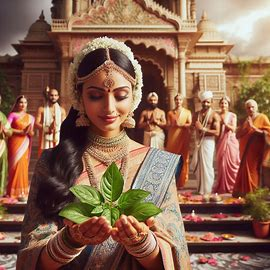

For spiritual practitioners, Andal's story presents an essential question: Are we ready to receive the Divine? Before embarking on any spiritual practice (sadhana), we must examine our willingness to renounce all worldly attachments, whether good or bad. This self-examination reveals the depth of our attachments to family, friends, and the various comforts and pleasures of life. But we must ask ourselves: Are these attachments worth holding onto if they hinder our spiritual progress toward the Divine? Is not God-realization the ultimate fulfillment of all life?

Andal's journey teaches us the importance of unwavering faith and devotion. Even when doubts and questions arise, trusting the Lord is paramount. By combining faith with devotion, we will eventually feel an inner guidance—an Inner Knowledge that may not be immediately explainable but will make perfect sense in hindsight.


In her single-minded devotion, Andal showed that following the divine call within is paramount. She was undeterred by any earthly attachments, and her life serves as a powerful inspiration for those seeking to achieve their spiritual goals. By following her example, we can realize that life makes sense only when the Divine shines within us. God’s grace and blessings can shower upon us at any moment—all we need to do is remain open to the Divine and follow our inherent dharma.

Andal's life story is more than a historical account; it is a spiritual lesson in the power of devotion and the ultimate purpose of life. Her unwavering faith and commitment to the Divine remind us that when we align ourselves with the Divine will, we find true meaning, fulfillment, and liberation.

IF HE EXIST

 I drive joy there was a doctor in Benaras who spent 7 minutes in the morning and evening for mediation on God. Knowing this, his colleagues and friends laughed at him. One day they argued that he was wasting 7 precious minutes on something, which he had been misled into believing. The doctor replied, “Well, if God does not exist, I agree that I am wasting 7 minutes a day. But, if He exists? I am afraid you are wasting your entire lifetime. I prefer to waste 7 minutes rather than a lifetime. Why should you grudge me the 7minutes joy that I derive 4m.-

ILLUSTRATED REVIEW : In Epl Arsenal no 7 scored a goal 

Monday, August 12, 2024

The Path to Harmonious Leadership

 The Path to Harmonious Leadership


To achieve a state of harmonious leadership and to demonstrate illustrious virtue across the Empire, the ancients understood that the journey began with oneself and extended outward to encompass the entire realm. Their wisdom reveals a sequence of steps that start from within and gradually influence the broader society.

The first step for those who wished to manifest illustrious virtue throughout the Empire was to establish order within their own States. However, the ancients recognized that to govern a State effectively, one must first ensure that their own family is well-regulated. The reasoning behind this is clear: the family is the fundamental unit of society, and its stability and harmony are essential for the stability and harmony of the State.


But the process does not begin with the family. To regulate one's family, the ancients believed that it was necessary first to cultivate one's own person. Cultivating the person involves nurturing one’s character and moral integrity, which requires a deep introspection and self-discipline. This cultivation, however, is not merely an outward show of virtue but begins with the rectification of the heart.

Rectifying the heart means aligning one’s emotions and desires with what is just and good. It involves eliminating selfish motives and embracing sincerity in one's intentions. But sincerity does not arise in a vacuum; it is rooted in clarity of thought. Therefore, to achieve sincerity in thoughts, one must first extend their knowledge to its fullest potential.

The extension of knowledge, according to the ancients, comes from the rigorous investigation of things. This investigation is a process of seeking truth and understanding the world deeply and comprehensively. By engaging in this process, one attains complete knowledge, which in turn purifies the thoughts.

When thoughts are sincere, the heart is rectified. A rectified heart leads to the cultivation of the person, as one’s actions and character become aligned with moral principles. With a cultivated person comes the ability to regulate the family effectively, as personal virtue naturally extends to influence one’s household.


When families are well-regulated, they form the foundation of a well-ordered State. A State governed by individuals who have cultivated themselves and regulated their families will naturally achieve harmony and justice. Ultimately, when each State within the Empire is governed in such a manner, the entire Empire becomes tranquil and prosperous.

This ancient wisdom emphasizes the interconnectedness of personal virtue and societal well-being. It teaches that true leadership and the demonstration of illustrious virtue are not achieved through external means alone but are the result of a profound inner journey that begins with the individual and extends outward to encompass the whole Empire. By following this path, one can contribute to a world of peace, harmony, and lasting happiness.

7 Principles for Making Things Happen


Creating your world and achieving success is within your reach if you embrace these seven key principles. The reality is that 90% of the world's wealth is held by 10% of the population because they apply these steps in their lives. While others merely think about what they should do, successful people put in the effort to turn these principles into practice.

1. Believe While Others Doubt

Self-belief is your most powerful asset. If you don’t believe in your ability to create the life you desire, no one else will. Belief is the bridge between thoughts and actions. The word "believe" sounds like "be live," reminding us to always be alive and resilient in the face of doubt from others. When you feel uncertain, remember that God, your ever-present Spiritual Father, believes in you.

 2. Plan While Others Sleep


Success comes to those who manage their time wisely. The saying “Early to bed and early to rise makes a man healthy, wealthy, and wise” isn’t about staying awake while others sleep. It’s about using your time effectively. While others waste time on activities that don’t matter, focus on planning and managing your time to achieve your goals, balancing work and social life.

 3. Decide While Others Delay

Decisiveness is a rare but essential quality. Many people struggle to make decisions because their minds are scattered in too many directions. Instead of trying to do everything at once, focus on one thing at a time. Make decisions with a calm mind, and you’ll find that your ability to choose wisely improves as your focus sharpens.

4. Work While Others Dream

The story of the "Ant and the Grasshopper" illustrates the importance of working hard while you have the energy. Just as the ants worked diligently in the summer to prepare for winter, you should work hard during your productive years. Building a strong foundation early means you won't have to rely on others later in life.

5. Listen While Others Talk

While talking is important, listening is even more crucial. Listening allows you to understand others through their words and actions. If you don’t listen carefully, you might miss valuable insights and opportunities. Good listening fosters understanding and prevents misunderstandings, reducing stress and strengthening relationships.

 6. Persist While Others Quit

Persistence is the key to overcoming obstacles. A great example is a mother who ensures her child gets the necessary nutrients, even if the child dislikes the food. Similarly, when pursuing a goal, persistence helps you find solutions in the face of challenges. Staying calm in a crisis is vital, and practices like Rajyoga Meditation can help maintain your composure and determination.


 7. Love While Others Hate

Choosing love over hate is challenging but essential. It’s easy to hate, but it takes strength to love and accept others, flaws and all. We are all souls, children of the same Creator, with a universal need for love and acceptance. Remember that karma is like a boomerang—what you give is what you receive. In a world already filled with hate, choosing love can make all the difference.

By applying these seven principles, you can create the world you want and join the ranks of those who not only dream but also make things happen.

The Best!

The best king is thinking

The best wealth is health

The best cure is Nature cure

The best culture is agriculture

The best ism is patriotism

The best city is simplicity

The best fare is welfare

The best ship is friendship

The best existence is co-existence

The best love is True-love

The best day is today.


IF HE EXIST

 I drive joy there was a doctor in Benaras who spent 7 minutes in the morning and evening for mediation on God. Knowing this, his colleagues and friends laughed at him. One day they argued that he was wasting 7 precious minutes on something, which he had been misled into believing. The doctor replied, “Well, if God does not exist, I agree that I am wasting 7 minutes a day. But, if He exists? I am afraid you are wasting your entire lifetime. I prefer to waste 7 minutes rather than a lifetime. Why should you grudge me the 7minutes joy that I derive 4m.-

ILLUSTRATED REVIEW : India won 7 medal with V.Phogot medal 

Monday, August 5, 2024

The Power of Knowledge

   The Power of Knowledge


Man is a rational being with the power to think. He seeks to gain superiority over others and uses his knowledge to dominate everything. He believes himself to be the master of his own fate, convinced that his actions are right and should be universally accepted.

Everyone in the world desires great power and authority, but the real power lies in knowledge. Those who possess knowledge invariably rule over those who do not. Educated and learned individuals always have an advantage over the ignorant.


What distinguishes man from animals is his intellectual power. This brainpower enables man to acquire knowledge and rule over the world. In physical strength, beasts and animals are much superior to man, yet they are his slaves. This is because man’s superior intelligence and knowledge make him the master of all creatures.

In ancient times, Brahmins commanded great respect and power. They were held in high esteem and appointed to high posts by kings. They were the leaders of society, and no one could dare to go against their wishes. This was because most people in those days were ignorant. All the knowledge was possessed by the Brahmins and the priests, and their knowledge gave them power over the entire society.


A soldier may feel proud, thinking he is a man of great strength and power, capable of wielding the sword. However, he does not realize that he is merely a tool in the hands of his commander. The commander himself has to obey the commands of higher authorities with better knowledge and intelligence. Thus, we see that the more knowledge a man possesses, the greater power and influence he commands.

Even today, advanced nations exercise great influence over developing nations. Their superior scientific knowledge and technological advancements give them greater power than other countries.

The Essence of True Success


Only a courageous person can aim for and achieve their goals—whether it’s a mountaineer climbing the Himalayas, a young individual striving to excel in their career or hobby, or someone pursuing the highest spiritual goals. Any ordinary person can reach their goals through hard work and perseverance.

A success story is unique and personal, not a result of comparative study and analysis. Every individual has their own path, starting and finishing at different points. For example, a drug addict who overcomes addiction has a success story to tell. A single mother from a financially weak background who provides a good education for her children is another story of success. Similarly, the son of a business magnate who creates his own niche as an entrepreneur has his own success story. There is no basis for comparison among these stories.


Many success stories involve playing 'hide-and-seek' with success. People find success, lose it, and sometimes have to start from scratch again. What causes this cycle?

Perhaps it’s because their perseverance was driven by the desire for name, fame, and prosperity, leading them to take their success for granted and become complacent. Or maybe their highest goal changes after achieving it, causing them to seek new goals. It could also be a combination of both.

True and lasting success involves both survival and sustenance. It’s a struggle to survive through challenging circumstances, emerging stronger and more resilient, like gold refined by fire. Sustaining success requires adhering to the same values that guided one to it in the first place. For me, the means are as important as the end.

On further reflection, the greatest success story is not one driven by the desire for name, fame, and prosperity. It’s a spontaneous, passionate pursuit of a chosen path. Success in this context is about progress for its own sake, with focus on each step taken. In this state of consciousness, worldly definitions of success don’t matter. True success is born from a sense of fulfillment in the present moment and the courage to follow an inner call that guides one’s life. This inner drive unleashes tremendous mental, intellectual, and physical energy to tirelessly pursue one’s chosen path. Such a life, though it may not align with worldly standards of success, is undeniably a success in its own right.

IF HE EXIST

 I drive joy there was a doctor in Benaras who spent 7 minutes in the morning and evening for mediation on God. Knowing this, his colleagues and friends laughed at him. One day they argued that he was wasting 7 precious minutes on something, which he had been misled into believing. The doctor replied, “Well, if God does not exist, I agree that I am wasting 7 minutes a day. But, if He exists? I am afraid you are wasting your entire lifetime. I prefer to waste 7 minutes rather than a lifetime. Why should you grudge me the 7minutes joy that I derive 4m.-

ILLUSTRATED REVIEW : Djokovic won gold medal on 7,7

Monday, July 29, 2024

Navigating Life's Challenges: Effective Strategies for Overcoming Problems

 
Navigating Life's Challenges: Effective Strategies for Overcoming Problems

There is no sea without waves, just as there is no life without problems. Everyone, regardless of their socio-economic status, faces difficulties in their daily lives. However, the nature and severity of these problems vary from person to person.

  Understanding the Roots of Problems

Problems often stem from differences in opinions and perspectives. No two people think alike all the time, and this diversity of thought can lead to misunderstandings and conflicts. Many of us are quick to believe that we are right and others are wrong. When someone points out our mistakes or objects to our views, our pride can prevent us from admitting our faults. This stubbornness can escalate into unnecessary arguments and conflicts.

 
The Dynamics of Interpersonal Differences

We encounter people with differing views every day. If we fail to understand and adjust to these differences, problems are inevitable. Even when we are confident in our approach, we cannot always avoid issues created by others. In such cases, flexibility and adaptability are crucial.

 Cultivating Understanding and Flexibility

Believing that we are perfect and others are flawed is a harmful mindset. Instead, we should strive to understand people by listening to them patiently. If we are wrong, we should admit it promptly. Conversely, if the other person is right, we should sincerely appreciate their perspective. When we notice mistakes in others, it is more constructive to correct them politely and privately rather than pointing them out publicly.

 
Effective Communication and Respect

Expecting others to conform to our views is unrealistic. We should aim to communicate our perspectives in a convincing and respectful manner. When our views are reasonable and well-articulated, others are more likely to agree with us.

  Strategies for Problem Solving

1.  Self-reflection : Regularly assess your own actions and attitudes. Are you open to feedback and willing to admit mistakes?

2.  Active Listening : Pay close attention to others' viewpoints without interrupting or judging prematurely.

3.  Empathy**: Try to understand the emotions and motivations behind others' actions and perspectives.

4.  Respectful Communication : Express your views clearly and respectfully, avoiding confrontational language.

5.  Flexibility : Be willing to adjust your approach and compromise when necessary.

6.  Private Correction : When addressing others' mistakes, do so privately and with kindness.


By adopting these strategies, we can navigate life's challenges more effectively, fostering better relationships and reducing unnecessary conflicts. Embracing a mindset of understanding, patience, and flexibility will help us overcome problems and create a more harmonious environment for ourselves and those around us.

The Power of Patience: A Key to Success and Fulfillment


George Bernard Shaw famously said, “Two things define you: Your patience when you have nothing and your attitude when you have everything.” He also believed that all admirable human traits stem from the womb of patience. Indeed, patience is one of the most significant human attributes, opening up a plethora of blessings and benefits for those who embrace this divine quality. All scriptures categorically eulogize the significance of patience. The Quran states, "Innallaha Ma As Sabireen" – God is with those who have patience.

The Divine Sense of Patience


English poet John Milton, in his sonnet "On His Blindness," wrote, “They also serve who only stand and wait.” This line underscores the idea that having patience is akin to having a divine sense. Human history is replete with instances that consolidate our faith in the power of patience. Often, we get irritated and start cursing ourselves and those around us when things go awry, forgetting nature’s perennial law: with patience, one eventually gets everything.

Lessons from History


Consider the example of Alexander the Great. When he planned to subjugate the East, one of his wise friends advised him to have patience and dissuaded him from leading a tired and jaded army to the far East. His friend told him that his time to conquer the East would come, but he needed patience. However, the young and reckless Alexander ignored this sage advice. Although he reached India, he was forced to return to Greece, and disillusioned, he died on the way. Had Alexander possessed a modicum of patience, the history of the East might have been different.

Patience in Scientific Discoveries

The discovery of Penicillin by Scottish scientist Alexander Fleming in 1928 is another testament to the power of patience. Fleming wrote in his autobiography that it was his endless patience that eventually led him to discover the life-saving antibiotic. He failed nearly 100 times before finding a harmless antidote.

Similarly, Louis Pasteur and Thomas Alva Edison exemplified patience in their pursuits. They patiently waited for their proverbial "Eureka" moments to make discoveries that changed the collective destiny of mankind.

The Creative Persistence of Rabindranath Tagore

Had Rabindranath Tagore lost patience and stopped writing due to doubts about the worth of his work, the world would never have received the sublime 103 poems of "Gitanjali." His elder brother, Satyendranath Tagore, exhorted him to continue writing without losing patience, leading to a monumental contribution to literature.

Patience and Character

Patience teaches us that better times are on the horizon and, in the process, defines our attitude. As the verse goes, "Be still, sad heart, cease repining; behind the clouds is the sun, still shining." Patience is a quality that strengthens character and provides deep insights into things, people, and phenomena.

The Consequences of Impulsiveness

An impulsive person, no matter how intelligent, often loses life’s great opportunities that are destined to appear at their appointed time. The age-old Hindi maxim, "Samay se pahle aur bhagya se adhik kisi ko kuchh nahin milta" – one doesn’t get anything before its time and more than one's destiny – carries a hidden message. It suggests that only through inexhaustible patience does one attain what they are destined for.

Conclusion

In conclusion, patience is not just a virtue; it is a key to unlocking success and fulfillment. It strengthens character, provides insights, and aligns us with our destined path. Therefore, never lose hope and let patience guide you through life's challenges


IF HE EXIST

 I drive joy there was a doctor in Benaras who spent 7 minutes in the morning and evening for mediation on God. Knowing this, his colleagues and friends laughed at him. One day they argued that he was wasting 7 precious minutes on something, which he had been misled into believing. The doctor replied, “Well, if God does not exist, I agree that I am wasting 7 minutes a day. But, if He exists? I am afraid you are wasting your entire lifetime. I prefer to waste 7 minutes rather than a lifetime. Why should you grudge me the 7minutes joy that I derive 4m.-

ILLUSTRATED REVIEW : India beat sl by 7 wk and seal the series victory

Monday, July 22, 2024

The Elusive Nature of Happiness in Modern Life


 The Elusive Nature of Happiness in Modern Life


Strange as it may seem, tracing out the happiest people is not an easy task, and no definitive tests can be prescribed for it. Of course, in hindsight, one can judge when they were happy and when they were not, but they may not have perceived it the same way at that particular time. Often, a successful person may have found themselves happy during times of struggle. This period of struggle is sometimes considered a time of happiness, though this view is disputed by many, such as Browning, who claimed old age to be the best period of life.


Married people are generally considered happier than unmarried individuals, as bachelors are more prone to suffer emotional imbalances. However, this tendency is also observed in childless couples. Overall, it can be stated that the happiest people are those who have no particular cause to feel thrilled in life. They possess a natural contentment, though this is something not everyone aspires to. A lunatic in an asylum may be the happiest person, yet no one would choose to trade places with them.

The biographies of great individuals reveal that they passed through periods of depression. The "Sermon on the Mount" and Spinoza rank worry as one of the sins. Medieval monks spoke of dejection, sloth, and irritability, suggesting that these feelings make one believe that no good is worth doing. Religion has been considered a source of happiness. The happiness enjoyed by Hindu mystics and missionaries, who underwent various types of persecutions, must be rated differently.


On a more practical level, busy people, especially those who have found work to their taste, are generally happier than idlers. Along with happiness, recognition and wisdom are also aspired to. It is difficult to single out a particular period in history as happier than another. However, modern people seem to have fallen on evil times, as they take public affairs more seriously than their ancestors, who took even serious calamities lightly. This suggests that the modern man lacks the philosophical element necessary for true happiness.

The Eternal Debate: Belief and the Nature of God


The age-old question of the existence of God has perennially divided humanity into two distinct camps: believers and non-believers. This schism has given rise to an endless debate, with each side staunchly defending its position. Believers assert that God exists, while non-believers adamantly reject the notion. This dichotomy has shaped diverse definitions of God, reflecting the myriad perspectives arising from individual ideas and beliefs.

For believers, the concept of God is often intertwined with the dogma of organized religions. Each faith presents a unique portrayal of the Divine. The diversity in these depictions reflects the rich tapestry of human definitions but also underscores the inherent subjectivity in how God is perceived.

On the other side of the spectrum, non-believers, historically championed by communist leaders, argue that religion functions as a manipulative tool used by rulers and priests to subjugate people. They contend that in the name of God, people are deprived of necessities, such as food, clothing, and security.


However, believers and non-believers may overlook a nuanced understanding of the Divine. The point is that both are wrong. Believers claim that God exists, but have they explored and found? Non-believers assert there is no God, yet have they genuinely explored to determine this, and how do they define what God is or isn’t?

The Vedantic perspective raises crucial questions about the conventional understanding of God’s role in the world. When calamities strike or crimes occur, the common question arises: where is God? Vedanta posits that God is not an intervening force preventing atrocities or natural disasters. Instead, God is conceived as an existential truth, distinct from the human interpretations prevalent in various religions.


In Vedantic philosophy, there’s no concept of a controlling God who created the world and manages life, weather, rains, floods, and earthquakes. Vedanta defines God precisely with four words: Satya, Chaitanya, Ananda, and Vyapak – an existence that is truth, blissful, conscious, and omniscient. In this view, God is not a being nor a human-like figure manipulating the world. God is existence. Omniscience entails being pervasive across time, space, and objects, which implies that without the layers of the body, mind, and intellect – you, too, are God.


In the Vedantic worldview, God is not confined to a specific gender or form. The Upanishads refer to it as That – that Brahman, Existence, Truth, Bliss. This understanding challenges the conventional tendency to assign a gender, form, and address to the divine, emphasizing the boundless nature of existence.


Therefore, it’s crucial to recognize that if there is God, it resides within me. Conversely, if the concept of ‘me’ is nonexistent, then unquestionably, God doesn’t exist either. The evidence supporting the existence of God lies within you. You are the proof – what else could it be?


In this regard, the Upanishads prove immensely beneficial. It’s essential to note that the wisdom of the Upanishads is not exclusive to Hindus but is universally applicable. Upanishadic knowledge, known as Brahman Vidya where Brahman signifies the absolute Truth and Vidya represents knowledge, is accessible to everyone. Therefore, it is imperative to contemplate these concepts further, exploring the methods and means to realize ‘who am I.'

IF HE EXIST

 I drive joy there was a doctor in Benaras who spent 7 minutes in the morning and evening for mediation on God. Knowing this, his colleagues and friends laughed at him. One day they argued that he was wasting 7 precious minutes on something, which he had been misled into believing. The doctor replied, “Well, if God does not exist, I agree that I am wasting 7 minutes a day. But, if He exists? I am afraid you are wasting your entire lifetime. I prefer to waste 7 minutes rather than a lifetime. Why should you grudge me the 7minutes joy that I derive 4m.-

ILLUSTRATED REVIEW : Indian women beat Pakistan by 7 wk in asia cup

Monday, July 15, 2024

My Likes and Dislikes


  My Likes and Dislikes


Each one of us has our own unique likes and dislikes. What I enjoy might be unappealing to others, and it's not necessary that my preferences align with those of every family member. Individual tastes and whims are part of what make us unique. Here, I’ll share some of my personal likes and dislikes.

I have a deep appreciation for good books. I love immersing myself in the works of great authors, poets, and writers who have left a mark on the world. Their company, even if only through their writings, brings me immense joy and satisfaction. These literary giants provide nourishment for my mind and soul, keeping me intellectually and emotionally fulfilled.


Reading high-quality literature is one of my greatest pleasures. Conversely, I have a strong aversion to trashy books. The market is flooded with such material, and I believe it's better not to read at all than to indulge in foul and dirty books. I detest these poorly written works intensely, as they offer no real value and only degrade the reader's mind.

In addition to my love for good literature, I strongly dislike flatterers and sycophants. These individuals are detrimental to society, causing harm through their insincerity and deceit. They are our real foes, and we must be vigilant against their schemes. Flattery and sycophancy erode genuine relationships and create an unhealthy environment.


In summary, while each of us has our own likes and dislikes, it's important to cultivate good and healthy preferences. Surrounding ourselves with quality literature and avoiding the insincerity of flatterers can lead to a more fulfilling and authentic life. Let us all strive to develop tastes that enrich our minds and souls.

  Embracing Life's Beauty with a Joyful Heart

Life offers us profound dimensions and the world's beauty surrounds us at every moment. However, we often fail to see this splendor because our vision is clouded by fear and hatred. These negative emotions blind us to the wonders of existence.


To truly witness the divine play, or "leela," orchestrated by a higher power, you don't need to visit a temple every day. What is essential is a joyful mind and a kind heart. This higher power doesn't require your prayers; instead, it asks for your genuine joy and kindness.

Imagine the possibilities if you embraced life with a playful spirit. Your luck could change, and you might start seeing life as a precious gift. Accept the obstacles that come your way with grace and spread kindness tenaciously. Surrender to the enchanting rhythm of life, and you may find yourself in harmony with the divine tune.


Find joy in everything life offers, whether it's a challenge or a blessing. Cultivate compassion, regardless of the circumstances. Be ready to embrace playfulness and allow yourself to be swayed by the beauty of existence, even if you know it might be your last day.

In doing so, you will discover that life's true beauty and profound dimensions reveal themselves to those who approach life with a joyful heart and a compassionate soul.

IF HE EXIST

 I drive joy there was a doctor in Benaras who spent 7 minutes in the morning and evening for mediation on God. Knowing this, his colleagues and friends laughed at him. One day they argued that he was wasting 7 precious minutes on something, which he had been misled into believing. The doctor replied, “Well, if God does not exist, I agree that I am wasting 7 minutes a day. But, if He exists? I am afraid you are wasting your entire lifetime. I prefer to waste 7 minutes rather than a lifetime. Why should you grudge me the 7minutes joy that I derive 4m.-

ILLUSTRATED REVIEW :In euro cup Spain won with captain 7   , and in t20 series India won scoring 167 with captain 77


Monday, July 8, 2024

Life as a Symphony of Actions

 Life as a Symphony of Actions


If we delve deeply into the essence of human existence, we uncover that life is essentially a tapestry woven from a series of actions. These actions manifest across various dimensions: physical, sensory, mental, emotional, and intellectual.

Physical Actions: Voluntary and Involuntary

Physical actions encompass every movement our bodies perform. These can be divided into voluntary and involuntary actions:

Voluntary Actions These are the conscious activities we engage in, such as standing, sitting, lying down, walking, and talking. We initiate and control these actions deliberately.

 
 Involuntary Actions These are the automatic functions that our body performs without our conscious effort. Examples include the beating of our heart, the digestion of food, and the regulation of our breathing. These processes continue seamlessly, sustaining our life without any need for our direct control.

Together, voluntary and involuntary actions constitute the full spectrum of our physical activities.

Sensory Actions: The Gateway to Perception


Sensory actions involve our interactions with the world through our senses. They are facilitated by two types of nerve systems: sensory nerves and motor nerves.

Sensory Nerves These enable us to perceive the world around us. We see with our eyes, hear with our ears, taste with our tongue, smell with our nose, and feel textures with our skin. These organs of perception (also known as the Gnana Indriyas in philosophical terms) help us gather knowledge about our environment.


Motor Nerves: These nerves drive our actions in the world. They govern the ability to serve (using our hands), move (using our legs), speak (using our vocal cords), excrete, and reproduce. These actions are performed by our organs of action, referred to as the Karma Indriyas.


The combination of sensory and motor actions forms the basis of our interaction with the world through the senses.


 Mental Actions: The Realm of Thoughts

Mental actions pertain to the activities of our mind. When we contemplate something, plan an activity, or consider a desire, we are engaging in mental action. For instance, thinking about drinking coffee or deciding to watch a movie are mental activities. These actions are the cognitive processes that continuously occur in our minds, shaping our decisions and behaviors.

Emotional Actions: The Language of Feelings

Our emotions are another layer of action, distinct from mere thoughts. Emotional actions involve the feelings we experience, such as love, compassion, anger, and joy. When we express sentiments like, “I feel bad about this” or “I feel joy,” we are engaging in emotional actions. These actions reflect our internal emotional states and how we respond to different stimuli in our lives.

Intellectual Actions: The Pursuit of Understanding

Intellectual actions involve using our intelligence to comprehend and inquire about the world. When we explore questions like “What is a television?” or “How does the moon affect tides?” we engage in intellectual actions. These actions represent our quest for knowledge and understanding, driving our curiosity and learning.

Conclusion

In essence, life can be seen as a symphony of these various actions. Each type of action—whether physical, sensory, mental, emotional, or intellectual—contributes to the rich, dynamic experience of being human. Understanding and appreciating the interplay of these actions can lead us to a deeper awareness of our lives and the world around us.

  Karma Yoga: The Path to Spiritual Bliss


Karma Yoga, often regarded as the first step towards spiritual awakening, offers a profound and transformative approach to life. It teaches us that even if we do not achieve the ultimate spiritual goal, the journey itself is deeply enriching and brings immense joy and peace.

Understanding Karma Yoga

Karma Yoga, or the Yoga of Action, is about fulfilling our duties and responsibilities in life. These duties encompass obligations towards ourselves, our family, society, nature, our ancestors, the environment, and ultimately, God. The essence of Karma Yoga lies in performing these duties with devotion, viewing them as an offering to Ishvara, the Divine.


When we carry out our responsibilities as a form of worship, we begin to find joy and satisfaction in the actions themselves. While the results of our actions will inevitably follow, the focus of Karma Yoga is on enjoying the process and gracefully accepting whatever outcomes arise. This approach transforms mundane activities into a source of deep happiness and contentment.

The Divine Presence in Everyday Actions

In the Bhagavad-gita, Sri Krishna reveals the omnipresent nature of Ishvara: “I reside in the hearts of every being. I pervade the whole world.” This profound insight teaches us that we do not need to visit a temple or sacred place to connect with the Divine. Ishvara is present everywhere and in everything we do. By cultivating the right attitude—offering all our actions to Ishvara—we can find peace and purpose in our daily lives.

Adopting this dedicated mindset helps to dissolve many psychological and self-created problems. When we perform our duties with a sense of devotion and surrender to the Divine, we experience a sense of relief and clarity, as if our burdens are lightened.


Swadharma and Paradharma: Doing Your Own Duty


Karma Yoga emphasizes the importance of adhering to one's own duties, known as Swadharma. The Bhagavad-gita advises against Paradharma, which is attempting to perform someone else's duties. Each person has their own set of responsibilities and roles in life, and trying to take on others' roles or neglecting our own leads to imbalance and confusion.

Bhagavan's teaching is clear: embrace your Swadharma and avoid Paradharma. Moreover, steer clear of Adharma—actions that are harmful or unethical. Adharma, or Papa Karma, should be avoided at all levels: in speech, action, and thought. By focusing on fulfilling our own duties and avoiding harmful actions, we contribute to the harmony and order of the world.

  Karma Yoga as a Path to Inner Peace

Practicing Karma Yoga brings about inner peace and purity of heart. By performing our duties with devotion and offering them to Ishvara, we create a sense of order and tranquility around us. This practice helps us relax and fosters a deep sense of peace. Conversely, when we fail to fulfill our responsibilities or engage in activities that are not aligned with our duties, we experience anxiety and restlessness.

Karma Yoga, therefore, is not just about action but about the attitude with which we approach our actions. By viewing our work as worship and dedicating it to the Divine, we can transform our lives and find profound peace and fulfillment.

In summary, Karma Yoga teaches us to perform our duties with love and devotion, to focus on the action rather than the outcome, and to see all work as an offering to the Divine. This approach leads to a harmonious and contented life, paving the way for spiritual growth and enlightenment.

IF HE EXIST

 I drive joy there was a doctor in Benaras who spent 7 minutes in the morning and evening for mediation on God. Knowing this, his colleagues and friends laughed at him. One day they argued that he was wasting 7 precious minutes on something, which he had been misled into believing. The doctor replied, “Well, if God does not exist, I agree that I am wasting 7 minutes a day. But, if He exists? I am afraid you are wasting your entire lifetime. I prefer to waste 7 minutes rather than a lifetime. Why should you grudge me the 7minutes joy that I derive 4m.-

ILLUSTRATED REVIEW :In euro cup saka 7 socred a goal   , and Bembolo 7 scored a goal
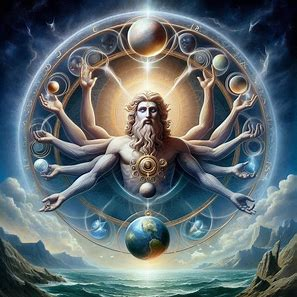


The Power of the Mind: Building a Life of Wisdom and Discipline

  The Power of the Mind: Building a Life of Wisdom and Discipline The mind is one of the greatest powers a human being possesses. It sh...

Advertise with with us make a profit

Advertise with with us make a profit
ITS FREE TILL YOU MAKE PROFIT

Contact Form

Name

Email *

Message *

Disclimer

Disclimer
Terms and Conditioin