7th Heaven Shop

7th Heaven Shop
Share a contribution Buying this Lucky 7 charm s

All About 7th Haven

Just like SMS to wish, After doing various test on experimental basis we have devised a method, like finding success through wishes and prayers. Its like wishing ponds or make a wish kind of thing, no you don’t need to through coin or penny just joining freely in our site would do. You can join in to wish your success and for success of your nation. more the nos of browser by signing up in www.7thhaven.in and more the observer in weekly wisdom we think more the success they would be able to achieve for their nation for any and many nation. Grater the nos of wishers grater the success, progress and prosperity for them and for their nation. So join in if you lover your success and your nation , . ITS ,SPIRITUALITY REDEFINED(Made Easy) This is royal knowledge, the royal secret, supremely holy, directly experience, righteous, easy to practice and imperishable.I cannot teach anybody anything. I can only make them think.–  Acknowledgement I Express My Heartfelt gratitude to all the support system I received form many commercial, technical, net server, software companies and also to those who have untouchables involvement and for their encouragement and guidance in all respects for the preparation of this website www.7thhaven.in inI am also indebted to all for providing me with all the necessary assistance necessary for the conduction of this site. Fr Samrat FOR THE BEST AND SAFE EXPERIENCE OF JOURNEY OF LIFE OBSERVE WEEKLY WISDOM Birthdays are not gauged by time and the years you spend on earth. But by your thoughts and actions which determine the real worth Society and the human being are not two different entities; when there is order in the human being, there will be order extermally. Because there is disorder in all of us, there is disorder outwardly. -J.Krishnamurti.BELIEVE IN FACTS AND YOURSELF MORE THAN THE STARS . INTELLEGENT OBSERVATION ALWAYS PAYS. IF YOU HAVE ANY IDEAS ON THE FOLLOWING THEME AND ANY VISION OF THOUGHT ON ANY CURRENT EVENT THEN WRITE TO US(within 7777 words) ALSO CHECK IN LIVE AND CHECK OUT THE ABSOLUTE MAGIC OF 7,9,10 IN ALL SPORTS ARENA Suitable articles will be published & rewarded-Most of us can read the writing on the wall.We just assume it's addressed to someone else-----Every moment is full of possibilities. It only requires your keen appreciation and best use of it to prove them to the world.The King may make a nobleman, but he cannot make a gentleman.Make yourself an honest man and then you may be sure there is one rascal less in the world.Even The actions of men are like index of a book; they point out what is most remarkable in them. if a very wicked person worships God to the exclusion of any body else, he should be regarded as righteous, for he has rightly resolved- Bhagavad Gita- When men are pure, laws are useless; when men are corrupt laws are broken-An original writer is not one who imitates nobody, but one whom nobody can imitate.What we lern with pleasure we never forget- My way of joking is telling the truth; that is the funniest joke in the world The first great gift we can bestow on others is a good example

Monday, March 18, 2024

The Soulful Habit: Exploring the Daily Practice of Diary Writing

 The Soulful Habit: Exploring the Daily Practice of Diary Writing


In a world inundated with digital distractions and fleeting interactions, the timeless tradition of keeping a diary persists, quietly anchoring individuals in the ebb and flow of their own lives. But why do people continue this intimate practice? What drives the daily ritual of penning down one's thoughts and experiences?


At its core, the diary serves as a sanctuary for self-expression, offering a safe haven for the raw emotions and innermost reflections that often go unvoiced. Whether it be the solitary musings of a schoolchild navigating the complexities of adolescence or the private deliberations of a seasoned politician grappling with the weight of leadership, the diary becomes a confidant in the journey of self-discovery.



As Angela Labert astutely observes, a child's diary becomes a clandestine arena where they begin to unravel the enigma of their own identity, testing the boundaries of autonomy amidst the backdrop of parental guidance. Here, in the pages of their diary, they embark on a voyage of introspection, charting the course of their burgeoning individuality with each stroke of the pen.


Yet, the allure of diary writing transcends age and occupation. For the modern journalist, tasked with distilling the complexities of society into coherent narratives, the diary becomes a crucible of empathy and insight. Embracing a regimen of reading, contemplation, and engagement with the world, the journalist cultivates a nuanced understanding of human experience, melding the rigor of intellect with the empathy of the heart.


In the words of "The Imperative of Freedom," the journalist must embody the duality of an artist's soul and a scientist's mind, navigating the tumult of human emotion with the precision of a scholar and the sensitivity of a poet. Through the daily discipline of diary writing, they hone this delicate balance, forging a profound connection with the pulse of society that transcends geographical borders.


Indeed, diary writing serves as a poignant reminder of the immutable truth articulated by the sage counsel: when engaging with others, one must tread lightly upon the terrain of emotion, recognizing the profound impact of pride, vanity, and prejudice on human interaction. In this realm of sentiment and sensitivity, the diary emerges as a steadfast companion, bearing witness to the kaleidoscope of emotions that define the human experience.


In essence, the daily practice of diary writing is a testament to the enduring power of introspection and empathy in a world fraught with noise and distraction. Through its silent pages, individuals across ages and professions find solace, clarity, and connection, weaving the tapestry of their lives with the threads of introspection and understanding. In the quiet intimacy of the diary, they discover not only themselves but also the profound interconnectedness of the human experience.

  The Path to True Power: Embracing Inner Strength


In a world where power often seems synonymous with wealth and fame, it's essential to recognize that true empowerment transcends material possessions. While money may grant influence and privilege, it does not inoculate against the afflictions of loneliness, depression, and the burdens of public scrutiny.


Indeed, the pursuit of external power can often lead to a profound sense of disconnection and vulnerability. Many who possess great wealth or fame find themselves ensnared by the trappings of their success, trapped in a cycle of discontent and longing for deeper fulfillment.



Yet, amidst this maze of worldly pursuits, there exist reservoirs of strength that lie within each individual, waiting to be harnessed. These inner powers offer a pathway to true liberation and resilience.


The first power is the courage to cut off that which binds us. Too often, we find ourselves entangled in relationships, possessions, or positions that suffocate our sense of autonomy and joy. However, by summoning the bravery to let go of these attachments, we reclaim our freedom and pave the way for genuine happiness.


The second power lies in forgiveness and boundless love. Even in the face of adversity, we possess the capacity to extend compassion and understanding to others, transcending personal grievances and fostering deep connections. This expansive love knows no boundaries or biases, embracing all beings with unwavering acceptance.


The third power emerges from the depths of understanding. Through meditation and introspection, we cultivate insight into the interconnectedness of all existence, dismantling barriers of prejudice and fear. In this state of profound comprehension, anger and division dissolve, paving the way for collective transformation.


These inner powers, rooted in courage, love, and understanding, possess the potential to catalyze profound change within ourselves and our communities. When individuals cultivate these qualities, they become beacons of hope and agents of progress, capable of shaping history for the better.


In embracing the path to true power, we transcend the limitations of external validation, finding strength in our capacity for empathy, forgiveness, and insight. By nurturing these inner virtues, we unlock the door to a more compassionate and harmonious world.

IF HE EXIST

 I drive joy there was a doctor in Benaras who spent 7 minutes in the morning and evening for mediation on God. Knowing this, his colleagues and friends laughed at him. One day they argued that he was wasting 7 precious minutes on something, which he had been misled into believing. The doctor replied, “Well, if God does not exist, I agree that I am wasting 7 minutes a day. But, if He exists? I am afraid you are wasting your entire lifetime. I prefer to waste 7 minutes rather than a lifetime. Why should you grudge me the 7minutes joy that I derive 4m.-

ILLUSTRATED REVIEW :7thheaven moment of the week in wpl Dc won against giant by 7 wk


Sunday, March 10, 2024

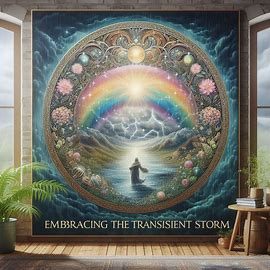
Embracing the Transient Storm: A Reflection on Sorrow and Wisdom

 Embracing the Transient Storm: A Reflection on Sorrow and Wisdom


In the intricate tapestry of life, sorrow descends upon the human heart like rain upon the earth. Yet, amidst the clouds of grief, there lies a profound truth – your sorrow, like a passing cloud, will eventually dissipate, leaving behind a transformed and enriched soul. This metaphorical rain of sorrows, though seemingly heavy, is the nourishment that prepares the heart for the blossoming of wisdom, akin to the way rain readies the soil for the growth of future crops of grain and fruit.


Much like the earth, which is darkened temporarily by rain clouds but ultimately benefits from their presence, the heart undergoes a similar process with sorrow. The clouds of grief cast a shadow over the heart, not to perpetuate darkness, but to pave the way for nobler sentiments. It is during the hours of sorrow that the superficial fades away, and the deeper aspects of human nature come to the forefront.


In the face of sorrow, there is an inherent call to reverence. It is a solemn hour that demands introspection and humility. Sorrow has the power to extinguish the superficiality of a shallow sneer, the callousness of a ribald jest, and the malevolence of a cruel calumny. The heart, softened by the downpour of grief, becomes receptive to the nuances of empathy and compassion. Sorrow, paradoxically, enriches the mind with thoughtfulness, laying the foundation for a more profound understanding of life's intricacies.


The hour of sorrow is a transformative phase, a crucible in which character is refined. It is through the refining fire of grief that the soul emerges with a heightened sense of purpose and a deeper connection to the shared human experience. In this crucible, the individual is compelled to confront the fragility of life, fostering a sense of humility that transcends the mundane concerns of everyday existence.


Wisdom, that elusive beacon guiding the way through life's labyrinth, is not acquired in the absence of sorrow. Rather, it is the culmination of lessons learned through the crucible of pain. Sorrow serves as a teacher, imparting profound insights that transcend the limitations of joyous moments. It is in the depths of despair that the seeds of wisdom are sown, and with time, they sprout into a rich harvest of enlightenment.


To dismiss sorrow as a permanent state is to misunderstand its nature. The metaphor of a passing cloud aptly captures the transient essence of sorrow. Just as clouds drift across the sky, casting shadows but eventually giving way to the radiant sun, so too does sorrow pass, making room for the light of hope and renewal.


Life's inherent ephemerality is both its challenge and its beauty. Sorrow, as an integral part of this ephemeral existence, serves as a poignant reminder of the impermanence of all things. Embracing this impermanence allows individuals to navigate the ebbs and flows of life with resilience and grace.


In conclusion, the metaphorical rain of sorrows that showers upon the heart may seem heavy and burdensome, but it is in this very precipitation that the seeds of wisdom are sown. The passing cloud of sorrow, though it may momentarily darken the sky of the heart, will eventually dissipate, making way for the warmth of renewed joy and understanding. In the tapestry of life, sorrow is not a permanent stain but a transformative thread, weaving a richer, more nuanced narrative of human experience.

 Temporal Symphony  Navigating the Enigma of Time and Human Existence"


Time, a perpetual enigma that has fascinated human minds throughout the ages, serves as the silent orchestrator of our lives, governing schedules, rhythms, and deadlines. However, within its relentless march, a persistent question lingers: Are we defined by time, or do we, in turn, shape time through the moments we inhabit?


Embarking on a contemplative journey through the complexities of human perception, the essence of existence, and the intricate dance between subjective experience and objective reality, we delve into the heart of this existential quandary.


At its essence, time is a measure, a yardstick guiding us through the passage of events. From the steady ticking of a clock to the cyclical rhythms of the natural world, time takes on various tangible and abstract forms. Despite our attempts to quantify and comprehend it, time eludes our grasp, slipping through our fingers like elusive grains of sand.


Philosophers and scientists, in their pursuit of unraveling time's mysteries, have proposed diverse theories, from Newtonian absolutes to Einsteinian relativity. Amidst these intellectual endeavors, a fundamental truth surfaces: time is intimately tied to our perception of reality.


Consider the concept of time dilation, where the passage of time varies relative to an observer's velocity or gravitational field. In this paradigm, time morphs from a fixed entity into a fluid, subjective experience shaped by individual perspectives. Psychological studies affirm the malleability of our perception of time, influenced by attention, emotion, and memory. Thus, while time advances objectively, its subjective experience remains infinitely mutable.


Amidst this backdrop of temporal fluidity, human consciousness emerges as a pivotal force in shaping time. In our relentless pursuit of understanding, we impose order on chaos, segmenting time into discrete units and assigning meaning to the intervals between them. In doing so, we not only measure time but infuse it with significance, weaving a tapestry of moments that define our lives.

These moments, however fleeting, hold the true essence of time. From shared laughter to the poignant farewell, our lives are punctuated by moments that leave indelible imprints on our consciousness, shaping memories, identities, and our perception of time itself.

Despite our attempts to measure and manipulate time, we remain subject to its elusive grasp. The desire to control time often leads to anxiety and existential angst as we grapple with the ephemeral nature of existence. The pursuit of immortality through legacy and memory reflects our longing to transcend the constraints of time and leave lasting imprints on the world.


In contemplating whether time defines us or we define time, a symbiotic relationship emerges. Much like a river shapes the landscape it flows through, our experiences sculpt the contours of time. In every moment of joy or sorrow, triumph or defeat, we leave an indelible mark on the fabric of existence, shaping the essence of time with our presence.

Amidst the complexities of time, a profound beauty resides in the present moment. Mindfulness practices guide us to savor the here and now, releasing our attachments to the past and future. Embracing the present, we reclaim agency over our lives, recognizing that our identities continuously evolve and unfold.

As we navigate the currents of time, let us remember that while the clock inexorably ticks forward, it is the moments we inhabit—the laughter, the tears, our purpose, the shared experiences—that truly define our lives. In the end, it is not the quantity of time that matters, but the quality of the moments we create.

IF HE EXIST

 I drive joy there was a doctor in Benaras who spent 7 minutes in the morning and evening for mediation on God. Knowing this, his colleagues and friends laughed at him. One day they argued that he was wasting 7 precious minutes on something, which he had been misled into believing. The doctor replied, “Well, if God does not exist, I agree that I am wasting 7 minutes a day. But, if He exists? I am afraid you are wasting your entire lifetime. I prefer to waste 7 minutes rather than a lifetime. Why should you grudge me the 7minutes joy that I derive 4m.-

ILLUSTRATED REVIEW :7thheaven moment of the week in Oscar Oppenheimer got 7 oscar, in epl son 7 scored a goal


Sunday, March 3, 2024

THINK NO EVIL: Embracing Wisdom and Overcoming Worry

 THINK NO EVIL: Embracing Wisdom and Overcoming Worry 

Embracing Wisdom: 


Education and knowledge are distinct from wisdom, which stems from a mindset of not harboring ill thoughts toward anyone, anywhere, or at any time. This principle of right action is grounded in three key practices: seeing no evil, hearing no evil, and speaking no evil. Each individual possesses an inherent capacity for wisdom, akin to a mental light bulb of varying wattage—be it 30, 60, 90, or even 700 watts. Fulfilling our responsibilities involves utilizing our mental "bulb" to its capacity, ensuring its cleanliness to minimize energy loss. By performing what we can and a bit more within our capacity, we fulfill our duty.


Strategies for Overcoming Worry: 

1.   Acceptance:   Recognize that anxiety is a natural facet of life, and experiencing worry doesn't set one apart from others.

  2.   Time Management:   Allocate a specific time to address worries, limiting the extent to which they consume your thoughts.

  3.   Problem Solving:   Confront issues honestly during the designated worry time, taking action where possible. If no immediate solution exists, postpone dwelling on it until action can be taken.

  4.   Perspective:   Keep worry in perspective, acknowledging it as just one aspect of life.


5.   Gratitude:   Cultivate gratitude by focusing on things for which you are thankful.

  6.   Outward Focus:   Redirect thoughts toward external matters and other individuals.

  7.   Trust in Higher Power:   Find solace in the belief in a higher power, recognizing that strength is readily available when needed.


 Religion: The Exact Science of Cultivating Clarity 


RELIGION: Beyond Superstition and Dogma, a Personal Science of Experience 


Religion is not a mere belief or superstition; it transcends dogma and necessitates personal experience. Unlike science, which operates through collective and objective inquiry, religious experimentation delves far deeper into the individual realm. In the profound exploration of meditation, the transformative process is intimate and personal, with no external witnesses. Although others may perceive a change in you, the mysterious nature of this transformation eludes their understanding.


Just as in the realm of love, where the experiencer comprehends the depth of emotion, religion, especially in prayer and meditation, surpasses even love's profundity. Yet, amidst contemporary assertions that label religion as superstitious or dogmatic, it is crucial to recognize that religion is, in essence, a science. This understanding holds true not for organized religions like Christianity or Hinduism but for individuals like Buddha, Jesus, and Krishna. The truly religious are those who venture beyond conditioned beliefs, exploring the depths of truth independently.


The Buddha's guidance emphasizes the rejection of blind belief. He urges disciples to refrain from unquestioning acceptance, advocating that true understanding arises only through personal knowledge. Genuine religious seekers demonstrate a daring spirit, a profound thirst for truth that surpasses social formalities. The essence of religion lies in its meticulous science, fostering clarity, perceptiveness, and transparency within one's being. Through this precision, individuals gain the ability to perceive reality as it is, unveiling the essence of godliness without the need for external proofs. In the world of religious experience, self-evidence reigns supreme, surpassing the need for belief.

IF HE EXIST

 I drive joy there was a doctor in Benaras who spent 7 minutes in the morning and evening for mediation on God. Knowing this, his colleagues and friends laughed at him. One day they argued that he was wasting 7 precious minutes on something, which he had been misled into believing. The doctor replied, “Well, if God does not exist, I agree that I am wasting 7 minutes a day. But, if He exists? I am afraid you are wasting your entire lifetime. I prefer to waste 7 minutes rather than a lifetime. Why should you grudge me the 7minutes joy that I derive 4m.-

ILLUSTRATED REVIEW :7thheaven moment of the week in wpl upw won by 7 wk


Sunday, February 25, 2024

Living a Purposeful Life: The Art of Making Each Day Count

  Living a Purposeful Life: The Art of Making Each Day Count


If you choose to engage in work, success awaits you; neglect it, and failure looms. Your attitude towards your tasks determines your satisfaction – dislike it through negligence or relish it through diligence. In social circles, finding contentment lies in the breadth of your connections – narrow groups offer self-satisfaction, while diverse friendships bring about fascination. Gossiping invites disdain, while minding your own business earns you favor. Behave foolishly, and you'll be shunned; act with humanity, and respect will follow.

The pursuit of wisdom determines your reception in wise circles – rejecting it invites rejection, seeking it attracts company. Adopting an attitude of boredom merely keeps you alive, while channeling your free time into meaningful pursuits shapes you into an educated individual.

"Make Each Day Count": A Universal Philosophy


The most effective way to navigate life is to make every day count, finding joy in the process. The idea of keeping oneself so occupied with living that there's no time to ponder its duration applies to all stages of life. Whether you're a child, a teenager, a young adult, in middle age, or older, embracing this philosophy brings about remarkable results.


The adage, "It's not how long you live that counts, but how you use your time," rings true. Embracing this perspective, one finds fulfillment and purpose, transcending age limitations. Running from death is futile, as everyone faces their appointed time. Thus, the key is not to evade death but to embrace life fully until that destined moment arrives.

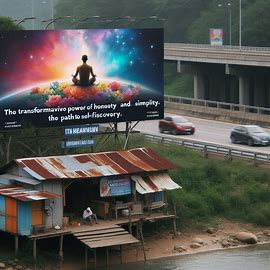
 The Transformative Power of Honesty and Simplicity on the Path to Self-Discovery"


Embarking on the journey of self-discovery necessitates a profound commitment to honesty, first with others and then with oneself. The initial step involves confronting the darkest aspects of one's nature, discovering that even the worst within is not as formidable as feared. This realization instills courage to confront life's challenges and navigate the path ahead. In a world marred by widespread dishonesty and hypocrisy, maintaining unwavering honesty proves to be a challenging yet essential endeavor.

Honesty serves not only as a guiding light on the inner path but also as a potent remedy for the afflictions that befall humanity. Relief from suffering lies within, attainable by consistently thinking, acting, and living with honesty in all aspects of life.

 Simplicity: Unveiling the Essence of Human Love  


Simplicity, born of humility, plays a pivotal role in nurturing human love. Distinguished from modesty, humility embodies strength rather than weakness. The challenge arises when attempting to express true humility, as the fear of external opinions may cloud authenticity. Genuine simplicity stems from humility, fostering a love that transcends superficialities and resonates with the profound.


"Faith, Conviction, and the Path to Realization"


Faith, a precursor to conviction, holds the key to spiritual evolution. It evolves from acknowledging forms and ceremonies to seeking the essence and discarding the superficial. The transformation from faith to conviction requires navigating obstacles and overcoming the ego's subtle traps. Ultimately, faith blossoms into conviction, leading to profound realizations.

Experience, categorized into external and internal, plays a crucial role in this journey. While external experiences may be subject to misinterpretation, inner experiences hold absolute conviction. True conviction, beyond theorizing or reasoning, arises from genuine inner experiences, paving the way for the realization of God.

Beyond Faith: Identifying with the Infinite

The culmination of the spiritual journey lies in the realization of God, transcending the need for faith or conviction. Just as a person does not require faith to believe in their humanity, the realized individual identifies with the infinite and recognizes the one Self manifested everywhere. This profound realization goes beyond the boundaries of faith, offering a transformative perspective on existence.


IF HE EXIST

 I drive joy there was a doctor in Benaras who spent 7 minutes in the morning and evening for mediation on God. Knowing this, his colleagues and friends laughed at him. One day they argued that he was wasting 7 precious minutes on something, which he had been misled into believing. The doctor replied, “Well, if God does not exist, I agree that I am wasting 7 minutes a day. But, if He exists? I am afraid you are wasting your entire lifetime. I prefer to waste 7 minutes rather than a lifetime. Why should you grudge me the 7minutes joy that I derive 4m.-

ILLUSTRATED REVIEW :7thheaven moment of the week in epl Saka 7 scored two goal


Sunday, February 18, 2024

Harvest of Duty: A Tale of Diligence and Divine Rewards

  Harvest of Duty: A Tale of Diligence and Divine Rewards"


In a quaint village, the arrival of an astrologer brought ominous news of a rainless year. The villagers, taking the prophecy seriously, contemplated abandoning their fields. However, amidst the collective concern, one solitary farmer stood undeterred.

Undeterred by the bleak forecast, this lone farmer continued plowing his fields and sowing seeds diligently. His hands worked the soil, and his heart resonated with the chant of the Divine name. As the villagers questioned his seemingly futile efforts, the farmer remained steadfast in his duty.

A sudden twist in the tale unfolded when a massive cloud appeared in the sky. Curious about the farmer's perseverance, the cloud questioned him, reminding him of the foretold dry season. Unfazed, the farmer responded with conviction, emphasizing his commitment to fulfilling his duty regardless of the circumstances. The cloud, impressed by the farmer's dedication, decided to reward him.


In a surprising turn of events, the cloud showered rain on the farmer's land, transforming it into a fertile haven. The once-barren field yielded a bountiful harvest, and the farmer, who steadfastly adhered to his duty, reaped the benefits of his unwavering commitment.

This tale encapsulates a powerful moral lesson: the unwavering dedication to one's duty brings forth rich rewards. The farmer's resilience and commitment to his responsibilities ultimately led to the abundance of blessings from the heavens. In a world often influenced by uncertainties, the story serves as a reminder that diligence, regardless of external circumstances, is a virtue that can pave the way for success and prosperity. "Harvest of Duty" stands as a testament to the profound impact of fulfilling one's obligations, even in the face of adversity.

 Bridging Millennia  Manduca Upanishad and the Quest for Consciousness"


In the heart of ancient wisdom, concealed within the sacred verses of the Atharva Veda, resides the Manduca Upanishad. Though comprising a mere 12 verses, this Upanishad has enchanted scholars and spiritual seekers alike, offering a profound perspective on human consciousness. It delineates consciousness into four states - wakefulness, dream-filled reverie, deep sleep, and the transcendental state of "Turiya."


Journeying through these realms, a narrative unfolds, intertwining the ancient with the contemporary. The Manduca Upanishad's exploration of consciousness finds parallels in the quests of modern science, particularly in understanding brain function. While wakefulness, dream states, and deep sleep align with contemporary scientific thinking, the enigmatic "Turiya" remains elusive, representing a state achievable through years of meditative practice.


Modern neuroscience, armed with advanced tools like fMRI and EEG, delves into the intricacies of the brain, deciphering the symphony of interactions giving rise to consciousness. Yet, the understanding of "Turiya" remains a frontier unexplored by current scientific paradigms. The Upanishadic perspective suggests that consciousness is universal, with the brain serving as an interpretive organ limited by its inherent size and capacity. Thus, a reptile and a human interpret the universe differently, akin to the limitations of outdated technology attempting to run modern software.


The scientific worldview, rooted in materialism, seeks physical explanations for phenomena. However, ancient Indian wisdom contends that certain phenomena possess an extra-materialistic basis beyond scientific determinism. This paradigm, dominated by tangible realities, limits our understanding to what instruments can measure and theories can explain. Hindu philosophy proposes the development of a super-powerful brain to interpret realities beyond the reach of current scientific tools.


Meditation, rooted in Upanishadic teachings, emerges as a key to exploring these uncharted depths. Long-term meditators exhibit gamma waves indicative of heightened consciousness. Furthermore, meditation can physically increase the brain's size, challenging conventional notions of aging and cognitive decline. This coexistence of the mundane and the extraordinary within neural activity points to a consciousness dimension beyond materialistic frameworks.


Contemporary science, fixated on the tangible and measurable, grapples with the complexity of the human brain. The Manduca Upanishad's emphasis on the transcendental state of "Turiya" offers a complementary perspective. Meditation and yogic practices, central to this ancient wisdom, provide experiential understanding beyond empirical research.


The narrative extends, drawing parallels between the holistic view of consciousness in ancient philosophy and the segmented approach of modern science. Integrative medicine, embracing practices like meditation and yoga, aligns with the holistic healing ethos of the Manduca Upanishad, offering comprehensive well-being.


Looking forward, the convergence of AI, quantum computing, and consciousness studies holds promise. Quantum computing may unveil the quantum dimensions of consciousness, while AI could integrate these discoveries with philosophical nuances. This fusion of ancient wisdom with cutting-edge technology signifies a future where the Manduca Upanishad's insights into consciousness may finally be unraveled, bridging millennia in the pursuit of understanding the profound aspects of human existence.

IF HE EXIST

 I drive joy there was a doctor in Benaras who spent 7 minutes in the morning and evening for mediation on God. Knowing this, his colleagues and friends laughed at him. One day they argued that he was wasting 7 precious minutes on something, which he had been misled into believing. The doctor replied, “Well, if God does not exist, I agree that I am wasting 7 minutes a day. But, if He exists? I am afraid you are wasting your entire lifetime. I prefer to waste 7 minutes rather than a lifetime. Why should you grudge me the 7minutes joy that I derive 4m.-

ILLUSTRATED REVIEW :7thheaven moment of the week in epl Saka 7 scored two goal


Sunday, February 11, 2024

Embrace Each Day with Joyful Living

 Embrace Each Day with Joyful Living


1) Setting the Tone: The Power of Evening Thoughts

The tone for each day is sculpted during the preceding night, shaped by the thoughts you entertain and the emotions you embrace before slipping into slumber.


2) Morning Reflections: The Impact of Sleep on Daybreak

Fall asleep harboring anger or worry, and it's likely that your waking thoughts will mirror those negative sentiments. The morning frame of mind becomes a pivotal force, influencing how you navigate the challenges and stresses awaiting you.


3) The Ripple Effect: Mood's Influence on Responses

A mental backdrop colored by anger or worry may inadvertently spur overly aggressive responses to daily demands. Impatience, resentment, and unfounded fears become unwarranted companions, hindering the ability to face situations with equanimity.


4) Breaking the Cycle: Unveiling the Beauty of Each Day

Worrying, essentially, is the art of imagining fearful scenarios. Amidst anger or fear, the profound beauty of the day eludes you, along with the joy of living, the warmth of human connections, and the gratification derived from a job well done.


5) Dawn of Positivity: Crafting a Morning Affirmation

To savor each day to its fullest, immerse yourself in thoughts of peace, happiness, and joy before bedtime. Upon awakening, seize the day by affirming, "A beautiful day has dawned—a day of great possibilities, splendid opportunities, and rewards. I shall meet the day's demands courageously and joyfully."


6) The Blueprint for Joyful Living

In doing so, you lay the foundation to live each day vibrantly—maintaining an even temper, shouldering burdens heroically, confronting challenges with courage, and exuding happiness and love in every circumstance.


7) Stevenson's Wisdom: Living Sweetly till Sunset

As Robert Louis Stevenson wisely notes, anyone can navigate life sweetly, patiently, lovingly, and purely until the sun sets. Cheerful work, akin to a mental and physical tonic, becomes a beacon, offering immeasurable advantages when facing daunting tasks with unwavering faith and expectation.

 Quality in Work: A Gateway to Fulfillment

Approaching daily tasks with a spirited work ethic shapes the quality of results. The mastery of small challenges paves the way for grand achievements. Whatever the endeavor, do it well, recognizing that good work is a reward in itself.

 Exploring the Neural Frontier: From Initiator Waves to Self-Awareness"


The intricate dance of communication within the human nervous system, governed by neural networks, is a marvel that orchestrates our every thought and action. The initiation of a neuroelectric impulse, akin to an Initiator Wave, sets in motion a cascade of events involving sodium and potassium ions, swiftly transmitting signals across synapses to effect actions.

Consider the act of pressing a laptop key: the journey from thought to action involves a sequential firing of neural pathways. Yet, when illness hampers motor areas, rendering neural pathways nonfunctional, the Initiator Wave falters, and actions become impossible.


In the quest to bridge this gap, Elon Musk's Neuralink technology emerges as a groundbreaking innovation. Implanted sensors intercept Initiator Waves, transducing them into electrical impulses. The chip, minuscule in size, connects to an external device, allowing individuals to operate computers or smartphones through mere intentions.

This technological leap challenges the traditional view of thoughts as intangible constructs. Thoughts are now perceived as electrochemical bioprocesses, decipherable by sensors. The decoding and transduction of more complex thought processes appear imminent, given the rapid pace of technological advancement.

However, amidst this technological marvel, a subtle yet crucial link persists—the connection between the observer and Self, known in Sanskrit as "sakshi." Sakshi, or pure awareness, observes thoughts without attachment. In the spiritual realm, the disconnect between observer and observed is deemed essential, as articulated in Sage Patanjali's 'Yog Sutras'—"Chitta vritti nirodhah."


True Self-realization, Patanjali asserts, emerges when pure consciousness (chitta) is detached from the disturbances of thoughts (vrittis). In this elevated state of non-dual awareness, any neural link becomes redundant. The ultimate salvation lies in delinking thought processes from the true Self, resonating with the profound wisdom encapsulated in the ancient Sanskrit phrase, "Aham Brahmasmi"—I am the universe.

IF HE EXIST

 I drive joy there was a doctor in Benaras who spent 7 minutes in the morning and evening for mediation on God. Knowing this, his colleagues and friends laughed at him. One day they argued that he was wasting 7 precious minutes on something, which he had been misled into believing. The doctor replied, “Well, if God does not exist, I agree that I am wasting 7 minutes a day. But, if He exists? I am afraid you are wasting your entire lifetime. I prefer to waste 7 minutes rather than a lifetime. Why should you grudge me the 7minutes joy that I derive 4m.-

ILLUSTRATED REVIEW :7thheaven moment of the week in epl Saka 7 scored a goal


Sunday, February 4, 2024

The Seven Types of Giving

   The Seven Types of Giving


1. Auto Givers: Those who give generously, but only to themselves.

2. Givers of Occasion: Those who give thoughtlessly, without any motive.

3. Repentant Givers: Those who give to pacify their conscience for past wrongs.

4. Theatrical Givers: Those who give for public applause and display.

5. Conventional Givers: Those who give reluctantly, merely following the crowd.

6. Moral Givers: Those who give out of duty rather than genuine care.

7. Spiritual Givers: Those who give out of love and a desire to help others, akin to the spirit of Lord.


  Embracing the Present


Yesterday, Today, and Tomorrow

In the ever-shifting sands of time, yesterday morphs into today, and tomorrow yearns to be today's reality. Yet, it is the present moment that holds true significance. To dwell in the present is to grasp life's essence.


Yesterday, a mere recollection. Tomorrow, a mere aspiration. Live resolutely in the tangible now, forsaking the ghosts of yesterday and the shadows of tomorrow.


The past, immutable. The future, uncertain. Embrace the gift of today, making it purposeful and profound. For yesterday is a wistful dream, and tomorrow, a distant vision. Focus not on bygone regrets or unborn anxieties, but on the immediacy of now.


Seize each day as if it were your last, for every moment bears weighty importance. Each day heralds a new beginning, a fresh chance to chart your course.


In the pursuit of lofty dreams and grand designs, do not forsake the tasks at hand. While it's tempting to gaze into the distant horizon, remember the significance of present endeavors.

It's admirable to dream of a future afar, yet do not neglect the treasures awaiting in the present. For while you dream, remember to act; while you plan, remember to live.

 The Worthwhile Challenge

Amid Doubt and Certainty

Believe when others falter,

Study while others slumber,

Work amidst others' dreams,

Dare in the face of neglect.


Give where others grasp,

Forgive as others condemn,

Forget when others judge,

Bend when others break.


Smile when others complain,

Bless amidst faultfinding,

Praise amidst criticism,

Love where bitterness dwells.


Save as others spend,

Conserve amidst wastefulness,

Listen while others talk,

Build where others destroy.


Trust when trust falters,


And in the midst of accusation, remain steadfast..

  Exploring Self-Inquiry: Descartes and Vedantic Philosophies


René Descartes, a 17th-century French philosopher, introduced the renowned statement 'I think, therefore I am' as a cornerstone of his philosophical method. Beginning his inquiries by doubting everything, even the existence of the external world, Descartes sought an indisputable starting point for self-knowledge.


In his meditations, Descartes recognized that while he could doubt everything, the very act of doubt presupposed a thinking entity. From this insight, he formulated the proposition that thinking is evidence of existence, underscoring the primacy of consciousness and self-awareness in philosophical inquiry.


The philosophical concepts of 'I think, therefore I am,' 'Neti, Neti,' and 'Tat Tvam Asi' share common threads of self-inquiry and understanding but unfold within distinct philosophical frameworks.


While Descartes' proposition serves as a foundational certainty, emphasizing self-awareness and establishing a starting point for knowledge, 'Neti, Neti' is a method of negation within Vedanta, systematically negating aspects of the self and the world to understand Brahmn, the ultimate reality. It is a broader framework that extends beyond the material world and thinking processes, encompassing the negation of the body, mind, and other aspects of the phenomenal world.


Similarly, 'Tat Tvam Asi,' translating to 'That Thou Art,' highlights the inquiry into the nature of the self and the realization of its identity with the ultimate reality. This concept goes beyond thinking, involving a profound experiential understanding achieved through spiritual insight and contemplation. It conveys the idea that Brahmn is identical to Atman, the individual self, emphasizing the unity of the individual soul with cosmic reality and the interconnectedness of all existence.


While Descartes and Vedanta explore the nature of self-awareness and existence, 'Tat Tvam Asi' goes beyond individual thinking and self-awareness to assert a profound identity between the individual self and the ultimate reality. The Vedantic concept is more inclusive, addressing the oneness of all existence, whereas Descartes' focus remains on the certainty of individual consciousness.

These philosophical ideas collectively illustrate diverse approaches to self-inquiry and understanding, offering valuable perspectives for contemplation.


IF HE EXIST

 I drive joy there was a doctor in Benaras who spent 7 minutes in the morning and evening for mediation on God. Knowing this, his colleagues and friends laughed at him. One day they argued that he was wasting 7 precious minutes on something, which he had been misled into believing. The doctor replied, “Well, if God does not exist, I agree that I am wasting 7 minutes a day. But, if He exists? I am afraid you are wasting your entire lifetime. I prefer to waste 7 minutes rather than a lifetime. Why should you grudge me the 7minutes joy that I derive 4m.-

ILLUSTRATED REVIEW :7thheaven moment of the week S.gill no 77 scored a century ,  in epl Mc ginn no 7 scored a goal,


Never Fail to Understand the Wonders That Make Life Beautiful

  Never Fail to Understand the Wonders That Make Life Beautiful Life is not measured only by the days we live, the achievements we collect,...

Advertise with with us make a profit

Advertise with with us make a profit
ITS FREE TILL YOU MAKE PROFIT

Contact Form

Name

Email *

Message *

Disclimer

Disclimer
Terms and Conditioin